
How the Three Categories Work
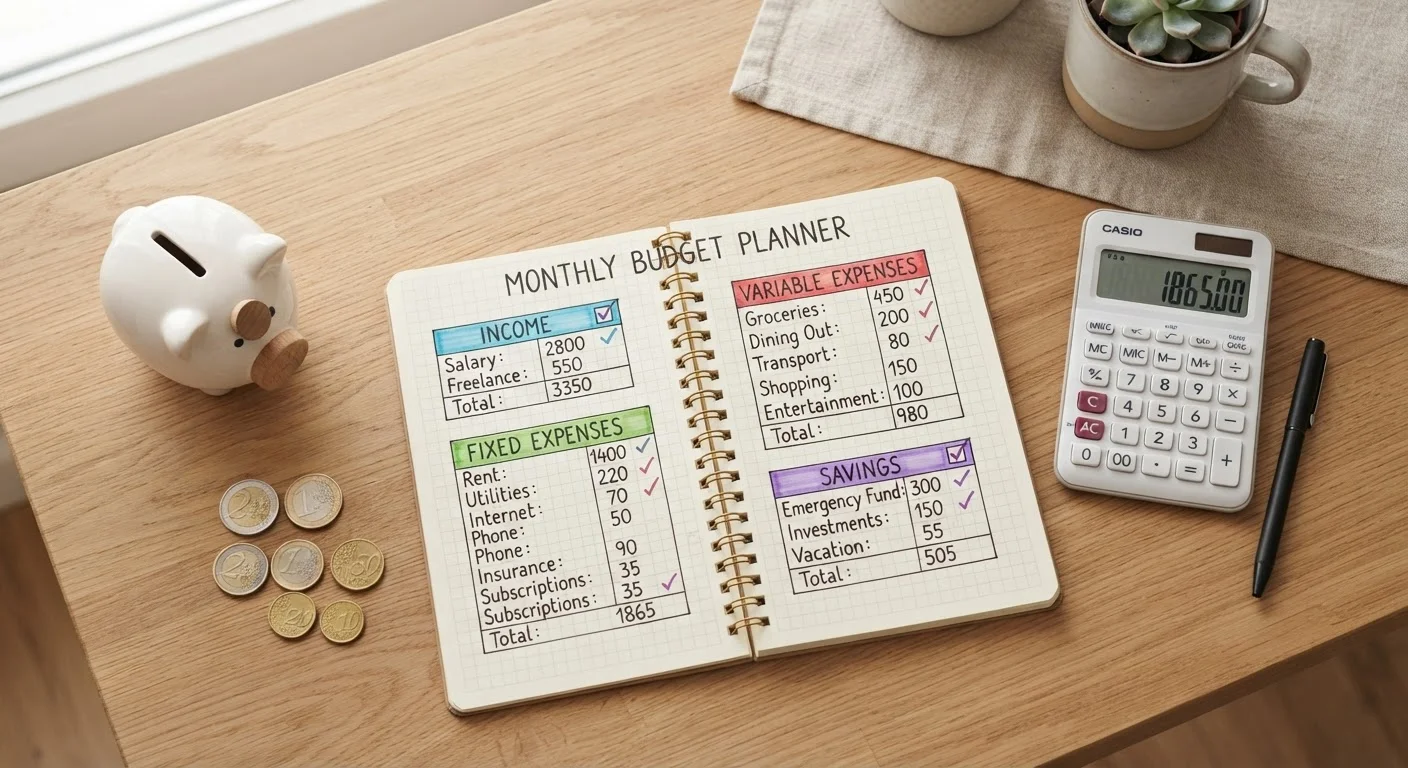
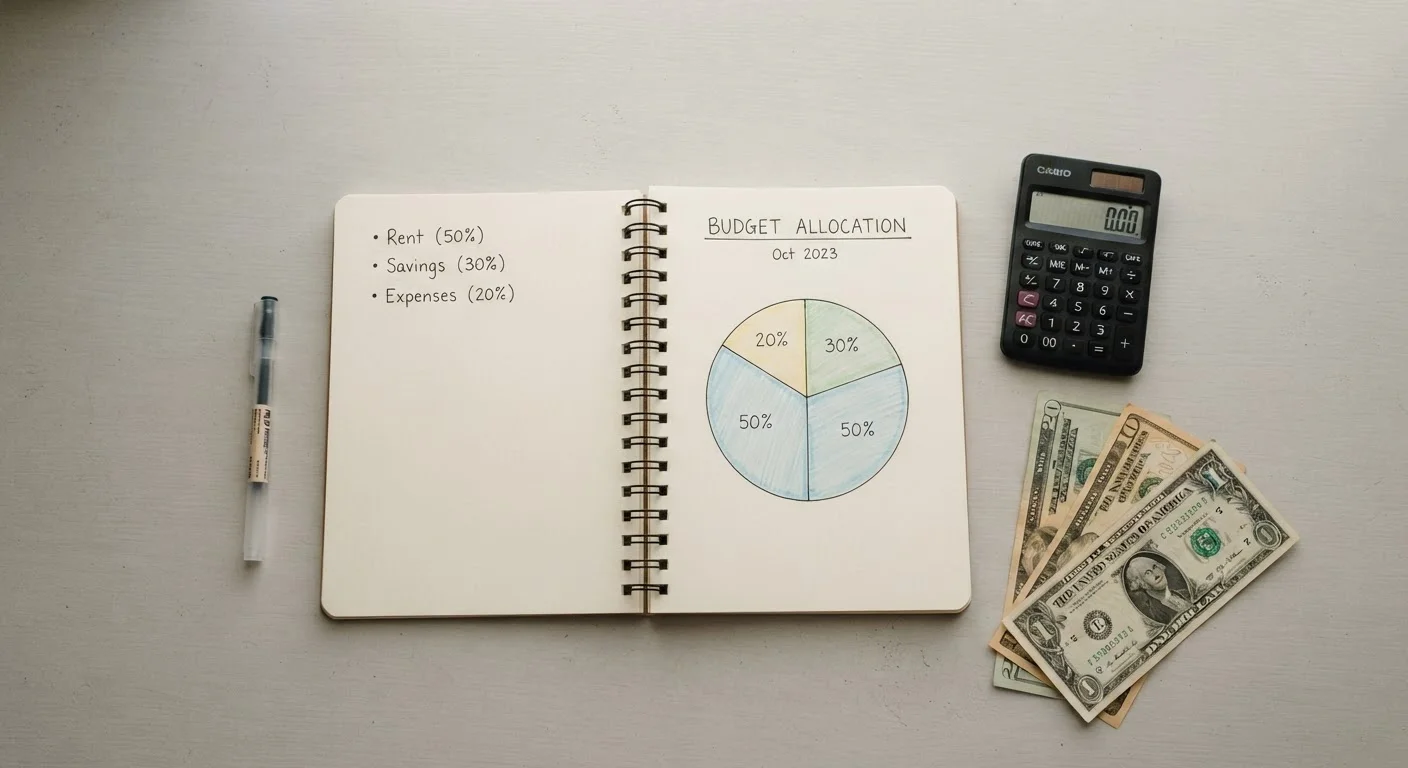
The rule starts with your after-tax income — every dollar you actually receive in your paycheck. From there, each dollar is assigned to one of three buckets:
- 50% — Needs: Essential expenses required for daily life. This includes rent or mortgage payments, utilities, groceries, basic clothing, transportation to work, minimum loan payments, and health insurance premiums. The test: would skipping it cause serious hardship?
- 30% — Wants: Discretionary spending that improves your quality of life but isn't strictly necessary. Think dining out, entertainment subscriptions, vacations, hobbies, and upgrades beyond the basics (a newer phone when your current one works fine, for example).
- 20% — Savings and Debt Repayment: Money directed toward your financial future. This covers emergency fund contributions, retirement account contributions, and payments above the minimum on debts. Addressing high-interest debt here is especially important since it directly improves your financial position.
The framework fits neatly into the broader goal of smart spending — keeping essential costs under control while still living your life.
Start by Calculating Your Real Take-Home Pay
Before assigning percentages, confirm your actual after-tax monthly income. If your pay varies — as it does for hourly workers, freelancers, or those with irregular hours — use a conservative monthly average based on your three lowest recent paychecks. Building your budget around a floor, not a ceiling, reduces the risk of overspending in good months.
Where the Rule Works Well
For someone just starting to budget, the 50/30/20 rule removes most of the complexity. You don't need a spreadsheet tracking 40 categories — just three. That low barrier to entry is its main strength.
It also builds in flexibility by design. If your wants spending creeps up one month, you can see at a glance which bucket is out of proportion and adjust. This makes it easier to maintain than more rigid systems that require tracking every coffee purchase.
It pairs well with other approaches too. For households juggling savings and debt at the same time, budgeting frameworks for saving while in debt shows how to adapt the percentages to your specific situation.
Where the Rule Falls Short
The 50/30/20 rule was designed for a median income in a median-cost area. Reality is often different.
High housing costs: In many U.S. cities, rent alone can consume 40–50% of take-home pay for a single earner. When that happens, the entire framework is already off-balance before factoring in groceries or utilities.
Low income: When income is tight, there may be very little left for wants or savings after needs are covered. A rigid 50% ceiling on needs doesn't reflect that reality.
High debt loads: The 20% savings-and-debt bucket can feel insufficient when you're carrying significant high-interest balances. In those cases, temporarily shifting money from wants to debt repayment often makes more mathematical sense.
If you find the broad percentages too loose, a more structured approach — like zero-based budgeting or the envelope method — may give you the accountability you need.
35%
Average share of income spent on housing
According to the U.S. Bureau of Labor Statistics Consumer Expenditure Survey, housing consistently represents the largest single expense category for American households.
$6,081
Average monthly household spending (U.S.)
The BLS Consumer Expenditure Survey reports average annual household expenditures around $72,967, making it difficult for many families to hit a clean 50/30/20 split without adjustments.
57%
Americans living paycheck to paycheck
A widely cited LendingClub and PYMNTS survey found that a majority of U.S. consumers reported living paycheck to paycheck, underscoring why flexible budgeting frameworks matter.
Adjusting the Split to Fit Your Life
Think of the 50/30/20 percentages as a baseline, not a mandate. Personal finance is personal, and the numbers should bend to your circumstances — not the other way around.
Common adjustments include:
- 40/20/40 — Aggressive debt payoff mode: cut wants deeply and redirect to the savings/debt bucket.
- 60/20/20 — Acknowledges that high fixed costs (childcare, medical expenses, high-rent cities) leave less room for wants or savings without eliminating them entirely.
- 50/20/30 — Prioritizes savings; suitable when income is stable and debt is minimal.
You can also use the rule as a diagnostic tool. Run through last month's spending and see how it actually breaks down. The gaps between your real percentages and the 50/30/20 targets will show you exactly where to focus. For a side-by-side comparison of this framework against others, see four popular budgeting frameworks compared.
This article is for general informational purposes only and is not personalized financial advice. Consider consulting a licensed financial professional for guidance specific to your situation.