
Why Contractor Quotes Confuse Most Homeowners
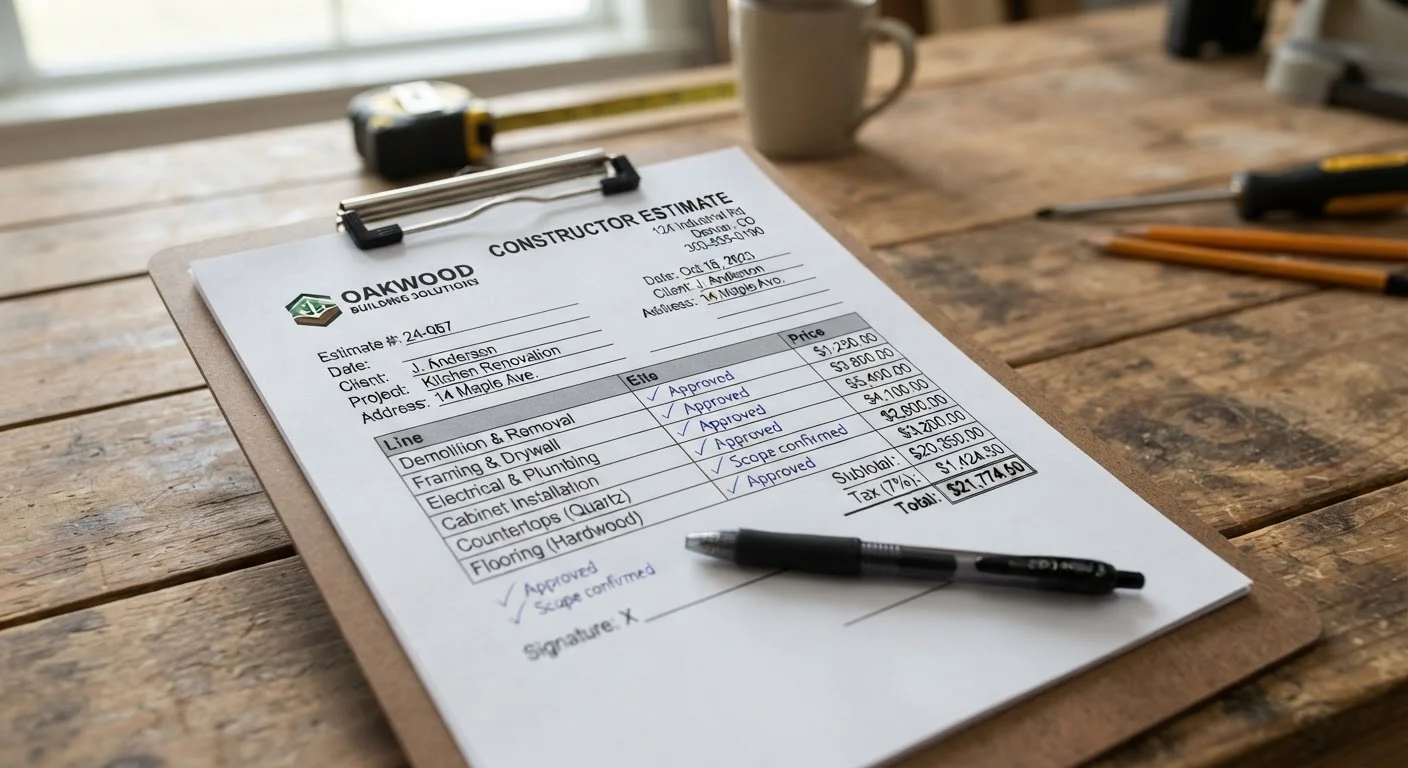
A contractor quote isn't just a number — it's a document with a specific structure, and each section tells you something different about how a project will be priced and managed. Misreading one line can lead to disputes, unexpected charges, or signing off on a scope that doesn't match what you actually want.
Before you compare quotes or negotiate, you need to understand what you're looking at. This reference breaks down the most common line items and terms you'll encounter, so nothing catches you off guard. For a broader view of what to watch for before committing to any renovation, see our guide on hidden costs that flip the math on apparent bargains.
Allowance
A cost placeholder in a quote for materials or finishes not yet selected — for example, a $500 tile allowance. If your actual selection costs more, you pay the difference.
Contingency
A percentage of the total budget reserved for unexpected conditions — like discovering water damage inside a wall. It is not extra profit; unused contingency should be returned or credited.
Markup
A percentage added to material costs to cover a contractor's sourcing, handling, and supplier coordination. Typically 10–20%, though this varies by trade and region.
Scope of Work
The written description of exactly what tasks, materials, and outcomes the contractor is agreeing to deliver. This is the most legally significant part of any quote or contract.
Lien Waiver
A document a contractor or subcontractor signs confirming they've been paid, relinquishing any claim against your property for that portion of work. Important for protecting homeowners from supplier claims.
Change Order
A written amendment to the original contract that adjusts the scope, price, or timeline. Any work added after signing should be documented as a change order before it begins.
The Core Line Items — Decoded
Most professional contractor quotes are organized around a handful of standard categories. Here's what each one actually covers:
- Labor: The cost of the contractor's time and any subcontractors they hire. This can be billed as a flat rate, hourly, or as a percentage of total project cost. Ask whether labor includes supervision time and cleanup.
- Materials: The physical supplies needed — lumber, drywall, tile, fixtures, fasteners. A detailed quote lists materials individually; a vague lump sum here is a red flag. Confirm whether prices are locked or subject to change if supply costs shift.
- Markup: Contractors add a percentage to material costs to cover sourcing, handling, storage, and their supplier relationships. A markup of 10–20% is typical, though it varies by trade and region. Some contractors show this explicitly; others fold it into the materials line.
- Subcontractor Costs: If your project requires an electrician, plumber, or HVAC tech, the general contractor may hire and manage them. These costs appear as a line item and often carry their own markup.
- Contingency or Allowance: A buffer — usually 5–15% of the total — set aside for unknowns. A contingency is the contractor's estimate of risk (what happens if they open a wall and find rot). An allowance is a placeholder for a decision you haven't made yet, such as the exact tile you'll choose. These are not interchangeable.
- Overhead: The contractor's business costs — insurance, licensing, office expenses, vehicles — spread across projects. This is a legitimate cost of doing business with a properly licensed professional.
- Profit: What the contractor earns after all costs. A transparent quote may show this separately, typically 10–15%. Seeing it explicitly is actually a good sign — it means the contractor isn't hiding margin inside other line items.
- Permits and Fees: Permit costs vary significantly by municipality and project type. Some contractors pass these through at cost; others add a handling fee. Always verify that permits are included and who is responsible for pulling them. For more on what permits to expect, the home improvement planning checklist covers this step in detail.
| Typical contractor markup on materials | 10–20% (Industry general guidance; varies by trade and region) |
| Common contingency buffer | 5–15% of total project cost (Standard industry practice) |
| Typical contractor profit margin | 10–15% (Industry general guidance) |
| Permit responsibility | Must be confirmed in writing — not assumed |
| Allowance vs. contingency | Allowance = undecided item; Contingency = unknown risk |
Red Flags and Questions to Ask
A quote that looks low may be missing key line items — not because the contractor is efficient, but because those costs will surface later. Renovation budgets routinely swell when scope, structural surprises, or permit fees weren't accounted for upfront.
Watch for these warning signs in any quote:
- No itemization: A single lump-sum number without breakdown gives you nothing to verify or compare.
- No contingency: Every renovation carries unknowns. A contractor who doesn't budget for them is either inexperienced or planning to charge for surprises separately — and without warning.
- Vague scope language: Phrases like "bathroom renovation" without specifying what's included leave room for dispute. Get every task in writing.
- No mention of permits: Unpermitted work can create legal and insurance problems when you sell or claim a loss. Always confirm permit responsibility in writing.
Once you understand the quote, the next step is managing the project itself. Experienced homeowners use specific habits to avoid disputes and budget blowouts — documenting work in progress being one of the most important.
This article provides general educational information about contractor quotes and is not a substitute for professional legal, financial, or construction advice. Always verify local permit requirements and consult a licensed contractor for guidance specific to your project.