
Why Lodging Type Has a Bigger Impact Than Most Travelers Expect
For many travelers, lodging is treated as a fixed cost — find the lowest nightly rate and book it. But the type of accommodation you choose shapes far more than your bill. It affects your sleep quality, daily routine, social opportunities, storage security, and even how much you spend on meals. Getting this decision right is one of the highest-leverage moves in any trip budget.
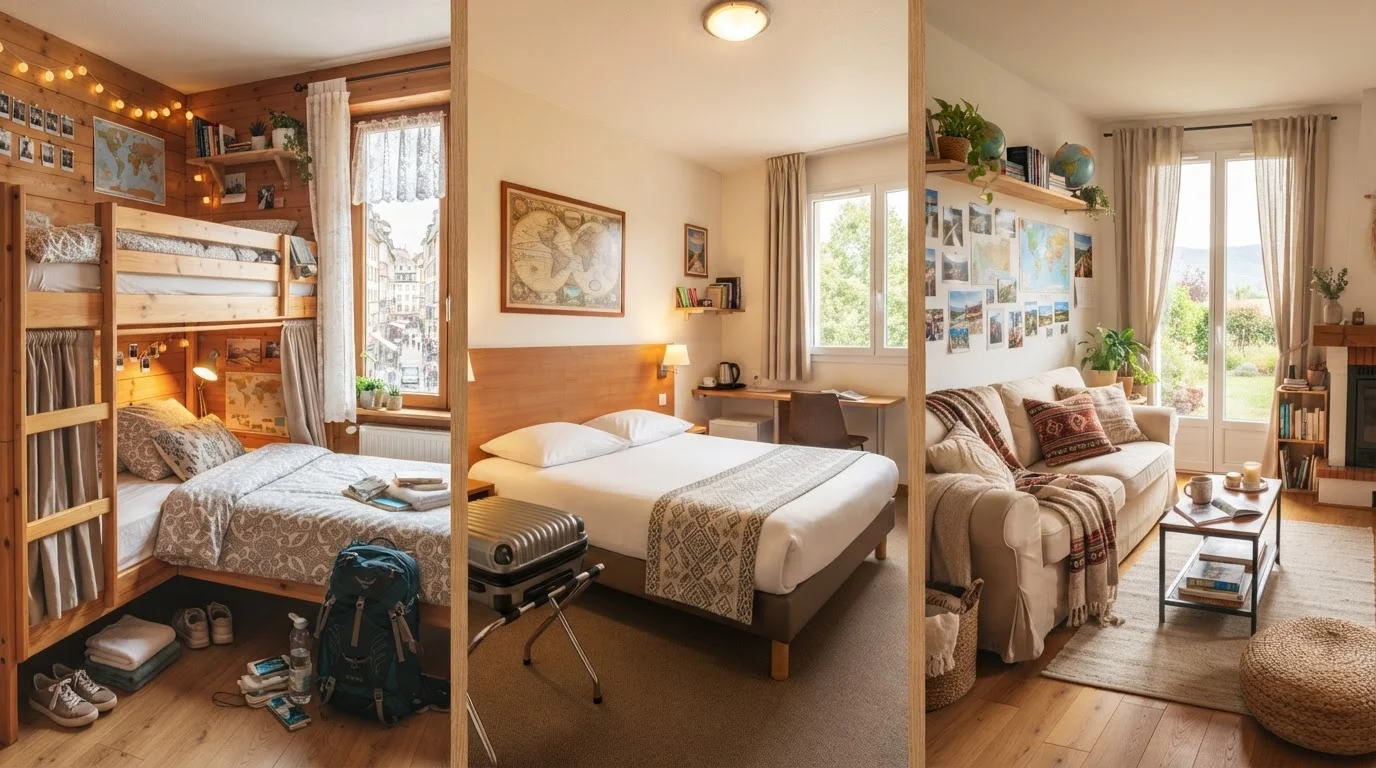
The three most common options for budget-conscious travelers are hostels, budget hotels, and short-term vacation rentals (such as those found on home-sharing platforms). Each has a distinct structure, and each fits certain trip profiles better than others. Understanding those trade-offs — rather than defaulting to whichever looks cheapest at first glance — is how experienced travelers stretch accommodation dollars further. For a deeper look at costs travelers routinely underestimate, see our guide to hidden travel costs.
Hostels: The Lowest Entry Price, With Real Trade-Offs
Hostels remain the most affordable option per night, typically offering dormitory-style beds at a fraction of what a private room costs. In many US cities and popular international destinations, dorm beds run anywhere from $25 to $60 per night — a meaningful difference from even the most modest private options.
What you gain in price, you give up in privacy. Shared bathrooms, common sleeping areas, and varying noise levels are standard. Lockers are usually provided for valuables, but luggage security is your responsibility. Hostels work particularly well for solo travelers who want to meet others, travelers moving quickly between destinations, or anyone prioritizing daytime activities over downtime in their room.
Many hostels also offer private rooms, which can rival budget hotel prices while still providing access to shared kitchens — a meaningful perk if you plan to cook some meals. If your trip involves early morning departures or you're a light sleeper, however, dorm life can meaningfully disrupt rest.
Check for Hostel Private Rooms First
Many hostels list private rooms alongside dorms, and these often include kitchen access not available in budget hotels. If you value both privacy and the ability to prepare your own meals, a hostel private room can offer an unexpectedly strong value combination. Compare the total cost against nearby budget hotels before assuming one is cheaper than the other.
Budget Hotels: Predictable, Private, and Often Underrated
A budget hotel — think independent motels, economy chain properties, or lower-tier city hotels — typically runs $70 to $150 per night depending on location and season. That higher price buys you something hostels can't reliably offer: a private room with a door that locks, a dedicated bathroom, and consistent cleanliness standards.
For couples traveling together, the per-person cost of a budget hotel room often approaches hostel prices, making the privacy upgrade essentially free. For solo travelers, the premium is real but may be worth it depending on trip length and sleep needs.
Budget hotels also tend to have well-defined cancellation policies, which matters when plans are uncertain. Before booking, it pays to understand exactly what terms like "non-refundable" or "free cancellation" actually mean in practice — our breakdown of hotel cancellation policies explains the key distinctions. One caution: always check for resort fees or mandatory charges added at checkout, which can add $20–$40 or more per night to the stated rate.
Vacation Rentals: Great Math for Groups, Complicated for Solo Travelers
Short-term rental platforms have made it easy to book apartments, houses, and guest cottages in almost any destination. For groups of three or more travelers, the economics can be compelling: a full apartment with multiple bedrooms, a kitchen, and a living room often costs less per person per night than individual hotel rooms would.
The kitchen access alone can offset costs significantly. Preparing even a few meals in rather than eating out every time reduces daily food spending — a real advantage on trips of five nights or longer.
The downsides are real, though. Cleaning fees on many listings add a flat $75 to $200 or more to the total, which erodes savings on short stays. Minimum night requirements, strict check-in windows, and limited recourse when something goes wrong (compared to a staffed hotel) are all factors worth weighing. Building your trip budget from scratch should include a line-item review of all rental fees before you commit.
| Hostel (Dorm) | Budget Hotel | Vacation Rental | |
|---|---|---|---|
| Typical nightly cost (US) | $25–$60 per person | $70–$150 per room | $80–$200+ per property |
| Privacy level | Low — shared room | High — private room | High — full unit |
| Best group size | Solo or small groups | 1–2 travelers | 3+ travelers |
| Kitchen access | Shared kitchen common | Rarely available | Usually included |
| Cancellation flexibility | Varies widely | Often flexible options | Often stricter policies |
| Hidden fees risk | Low | Moderate (resort fees) | Higher (cleaning fees) |
| Best trip length | 1–4 nights | 1–5 nights | 4+ nights |
How to Make the Decision for Your Specific Trip
Rather than defaulting to one lodging type across all trips, treat the choice as a calculation based on four variables: group size, trip length, privacy needs, and total cost after all fees.
- Solo, 1–3 nights: Hostels offer real savings if you can manage shared facilities.
- Couple, any length: Budget hotels typically win on per-person value and comfort.
- Group of 3+, 4+ nights: Vacation rentals often come out ahead once the cleaning fee is spread across multiple people and nights.
- Uncertain plans: Budget hotels with free cancellation give you the most flexibility.
Whatever you book, compare the all-in cost — including taxes, fees, and any mandatory add-ons. Platform booking versus direct booking also affects both price and flexibility. For a clear look at that trade-off, our guide to direct vs. third-party booking is worth reading before you enter payment details. For more strategies on getting the most from your lodging budget, see what experienced budget travelers actually do.