
Why Tracking Matters Before You Budget
Most people have a rough sense of their income but a fuzzy picture of their spending. That gap is where budgets fall apart. Before you can set realistic limits for any category, you need accurate data on where your money is actually going right now.
If you're just getting started, see our ground-up monthly budget framework for the broader structure this tracking process supports. Spending tracking is the data-collection phase that feeds every other budgeting decision.
The good news: you don't need a finance degree or a paid app to do this well. The three most reliable methods — a handwritten log, a simple spreadsheet, and bank statement review — are free, flexible, and proven.
What you will need
Three Methods That Actually Work
1. The Handwritten Daily Log
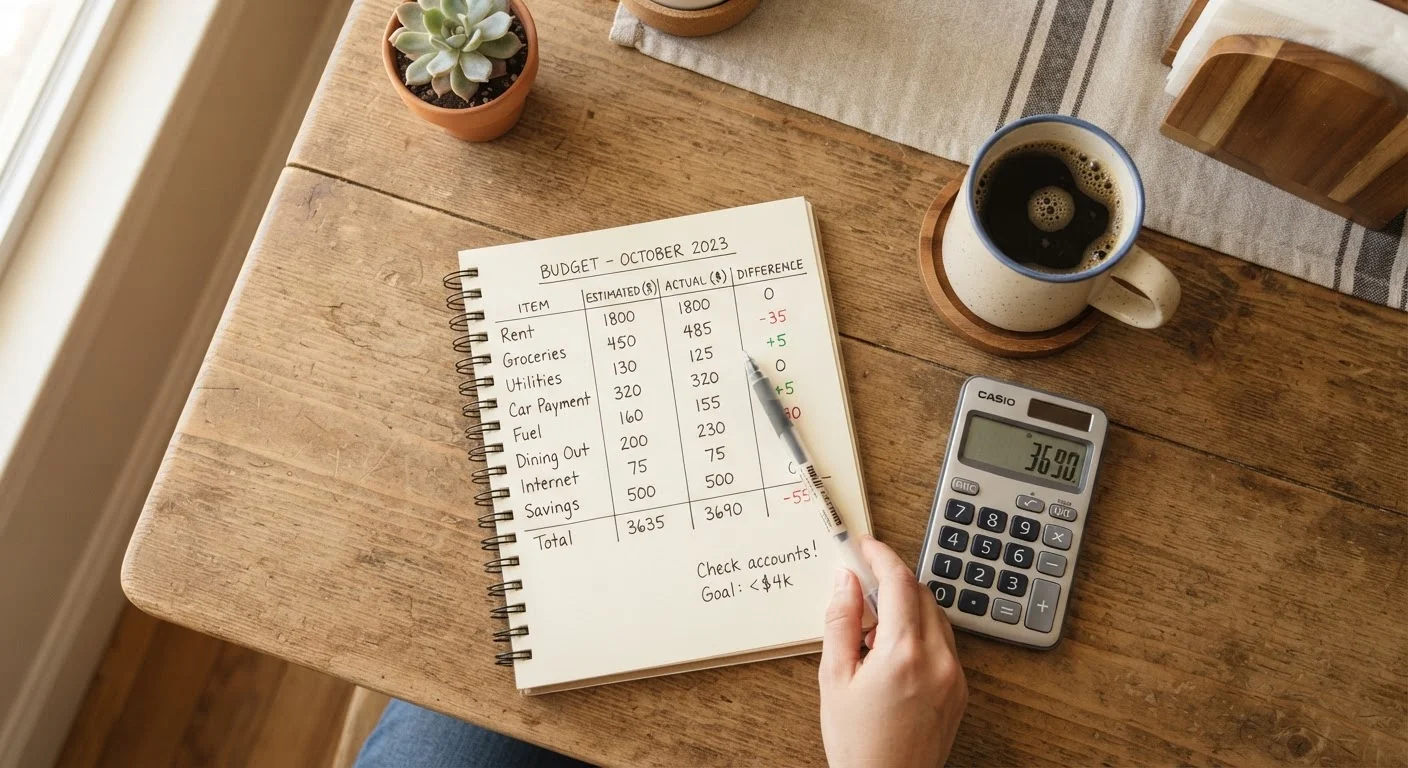
Write down every purchase the day it happens: the amount, the category (groceries, gas, dining out, etc.), and the payment method. A small pocket notebook or a notes app works fine. The physical act of writing reinforces awareness in a way that automatic tracking does not. Many people who try this method report genuine surprise at how often small purchases — coffee, vending machines, convenience stops — accumulate.
2. The Monthly Spreadsheet
Set up a simple spreadsheet with columns for date, description, category, and amount. At the end of each week, enter your transactions from receipts, bank notifications, or your memory of the week. Group your categories to align with a standard framework: fixed needs (rent, utilities, insurance), variable needs (groceries, gas), wants (dining, entertainment, subscriptions), and savings or debt payments. This approach takes 10–15 minutes per week and produces a clear month-end summary.
3. Bank and Card Statement Review
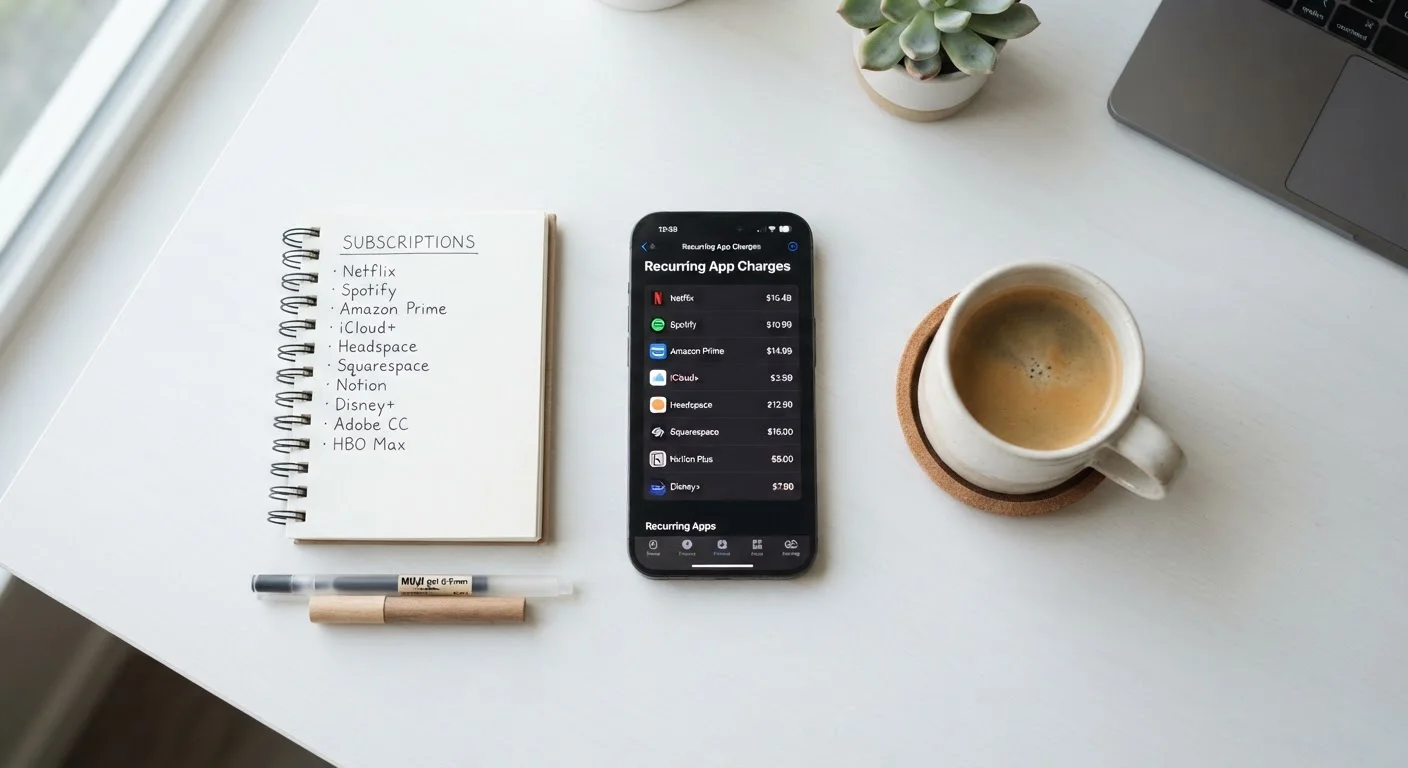
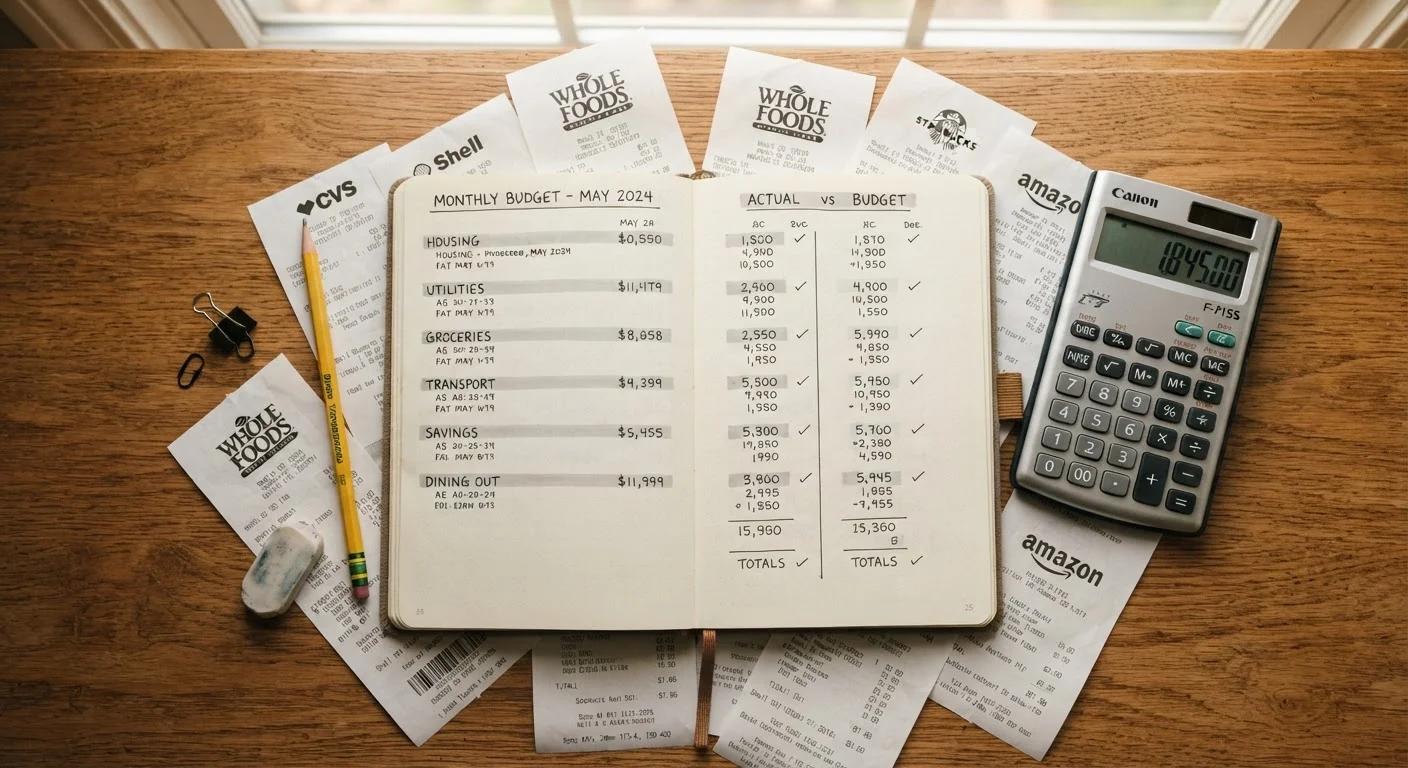
If daily logging feels like too much of a lift to start, a monthly review of your bank and credit card statements is a solid entry point. Go line by line, assign each transaction a category, and total each category. This method captures everything — but it's backward-looking, so it's harder to course-correct mid-month. Pair it with one of the other methods once you're comfortable. Don't overlook recurring charges: our guide on auditing your subscriptions walks through how to spot charges you may have forgotten entirely.
Start With Just One Week
If tracking every purchase for a full month feels overwhelming, start with a single week. One week of careful logging usually surfaces the spending patterns that repeat throughout the month. Once you've seen how it works, extending the habit to a full month becomes much easier.
How to Set Up Your Tracking System
Follow these steps to build a working tracking habit from scratch.
Choose your tracking method
Pick one method to start: handwritten log, spreadsheet, or statement review. Don't overthink this — the best method is the one you'll actually use. If you already carry a notebook, use that. If you're comfortable with a computer, start a spreadsheet.
Define your spending categories
Create 6–10 categories that reflect your real life. Common ones include: Housing, Utilities, Groceries, Transportation, Dining Out, Healthcare, Personal Care, Entertainment, Subscriptions, and Savings/Debt Payments. Avoid so many subcategories that tracking becomes tedious.
Record transactions consistently
Log each purchase as close to the time of spending as possible. For card transactions, your bank's notification alerts can serve as a prompt. For cash purchases, a quick note in your phone immediately after works well. Aim to log daily or, at minimum, every two to three days.
Do a brief weekly check-in
Spend 10 minutes at the end of each week reviewing what you've logged. Total each category and compare it against a rough weekly target. This mid-month check allows you to adjust spending before you've overshot your limits — something a month-end-only review cannot do.
Run your monthly summary
At month's end, total all categories and add them up. Compare total spending to your take-home income. Note which categories ran over, which came in under, and what your net difference was. This summary becomes the input for adjusting your budget going forward.
What to Do With the Data You Collect
Raw spending numbers are only useful if you review them. At the end of each month, total your spending by category and compare it to your income. Ask three questions: Which categories surprised me? Where did I spend more than I intended? What recurring charges am I no longer getting value from?
Once you have one month of real data, you can run a more structured review. Our 30-day spending audit checklist gives you a structured way to interpret the patterns your tracking reveals. From there, habits that keep a budget working can help you maintain the routine over time.
Tracking is not about judgment — it's about information. The more accurately you see your spending, the more control you have over it.
This article is for general informational and educational purposes only and does not constitute personalized financial advice. Consult a qualified financial professional for guidance specific to your situation.