

What 'Strict Budgeting' Actually Means
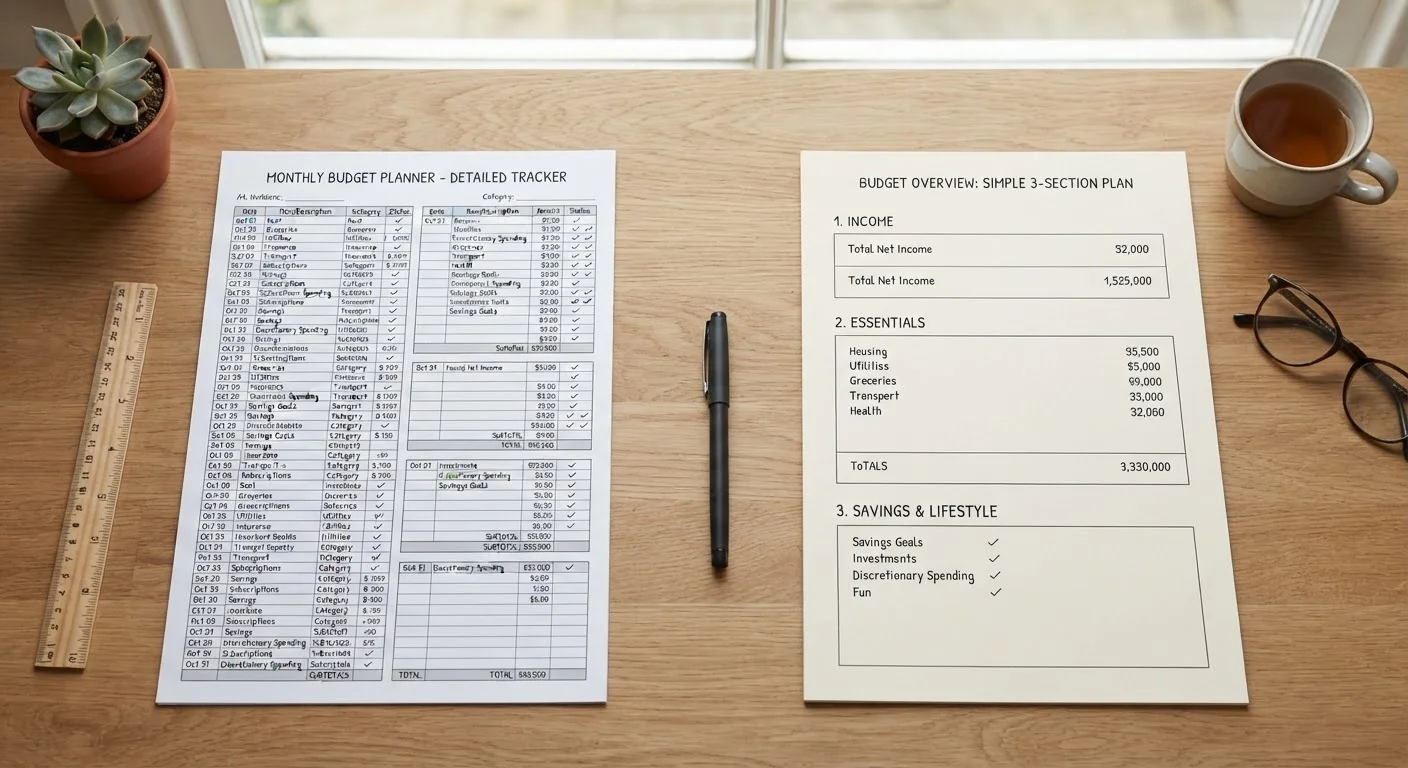
Strict budgeting means assigning every dollar a specific purpose before the month begins — and holding yourself accountable to those assignments. It goes beyond a rough sense of how much you spend. In practice, it involves tracking every transaction, setting firm category limits, and adjusting your behavior when you approach those limits.
Popular frameworks that lean strict include zero-based budgeting (where income minus expenses equals zero) and the envelope method (where cash is physically divided into spending categories). Both require more active management than a loose "try to spend less" approach. For a side-by-side look at how these methods differ, see zero-based budgeting vs. the envelope method.
This kind of budgeting isn't inherently better or worse than a flexible approach. Whether it works depends heavily on your income stability, spending patterns, and how you respond to constraints.
The Real Advantages
When strict budgeting works, it works well. The structure forces decisions that are easy to defer otherwise — like how much of your paycheck goes toward savings before anything else gets funded.
Builds consistent saving and spending habits
Assigning money to categories before spending it removes the guesswork and makes saving automatic rather than an afterthought.
Accelerates debt payoff and goal progress
With every dollar directed intentionally, it becomes easier to direct extra funds toward high-interest debt or a specific savings target.
Reduces financial stress through clarity
Knowing exactly where your money is going tends to produce less anxiety than a vague sense of spending being 'roughly okay.'
Surfaces hidden spending patterns quickly
Most people are surprised by how much they spend in certain categories — tracking reveals this within the first month.
Creates a foundation for smarter trade-offs
When you can see the full picture of your spending, it becomes easier to identify where cuts make sense and where they don't — see spending trade-offs worth making.
One of the less-discussed benefits is the reduction in financial anxiety. Knowing exactly where your money is going tends to feel less stressful than a vague awareness that spending is "probably fine." Research in behavioral economics consistently finds that a sense of control over finances correlates with lower reported stress, even when income is modest.
Strict budgets are also particularly effective during specific financial phases: paying down high-interest debt, building a three-to-six-month emergency fund, or saving for a defined goal like a down payment. The smart spending hub covers how to channel those savings toward goals that matter most.
The Real Disadvantages
The case against strict budgeting isn't that structure is bad — it's that structure without flexibility tends to break down. Most budgets fail not because of lack of intention, but because they don't account for how life actually works.
Can lead to budget burnout over time
Tracking every dollar and enforcing strict limits is mentally taxing. Without some breathing room, many people abandon tight budgets after a few weeks.
Fails to account for irregular expenses
Budgets that only plan for regular monthly costs get derailed by car repairs, medical bills, or seasonal costs that don't appear predictably.
May create an all-or-nothing mindset
One overspent category can feel like total failure, causing people to give up entirely rather than simply adjusting and moving on.
Difficult to maintain with variable income
Freelancers, hourly workers, and anyone with uneven paychecks face a harder challenge fitting variable earnings into fixed budget categories.
Can strain social and family life
Rigid limits on dining or entertainment can make it uncomfortable to participate in ordinary social activities, creating stress beyond finances.
Sinking Funds Can Soften the Trade-Off
A sinking fund is a small amount set aside each month for a known but irregular expense — like annual car registration or holiday gifts. By spreading these costs across the year, you prevent them from breaking your budget when they arrive. Many people who struggle with strict budgeting find that adding even two or three sinking fund categories makes the whole system far more stable. It's a minor structural change with a meaningful impact on whether a budget survives contact with real life.
Irregular expenses — car repairs, medical copays, back-to-school costs — are predictable in total but unpredictable in timing. A strict budget that doesn't build in buffers for these will be "blown" repeatedly, which erodes confidence and motivation. Understanding how fixed and variable expenses differ is foundational to building a budget that bends without breaking.
There's also the psychological cost. Budgets that leave no room for discretionary enjoyment — a dinner out, a small treat — tend to produce the same rebound effect as crash diets. People follow them strictly for weeks, then abandon them entirely. A more sustainable model often includes a modest "free spending" category that doesn't require justification.
Finding a Level of Strictness That Holds
The question isn't whether to budget strictly or loosely — it's what degree of structure your situation actually calls for. Someone carrying high-interest credit card debt may genuinely benefit from a tight, category-by-category system for six to twelve months. Someone with stable finances and modest goals may do just as well with a simpler framework like the 50/30/20 rule, which divides income into needs, wants, and savings without itemizing every expense. Comparing zero-based budgeting and the 50/30/20 rule can help clarify which fits your habits.
~32%
Americans with a written monthly budget
Gallup polling has consistently found that fewer than one in three U.S. adults maintains a detailed household budget, suggesting most operate without formal structure.
3–6 months
Recommended emergency fund target
Most mainstream personal finance frameworks, including guidance from the Consumer Financial Protection Bureau, point to three to six months of essential expenses as a practical emergency fund goal.
A practical middle ground: start with a stricter framework for two to three months to understand your actual spending patterns, then loosen the categories where you consistently under- or over-estimate. Your budget should reflect your real life, not an idealized version of it. For readers worried that any budget will feel restrictive, common budgeting myths addresses why many of those fears aren't well-founded.
Whatever level of structure you choose, the fundamentals matter: track spending consistently, revisit the budget when circumstances change, and give yourself realistic allocations. A budget you follow imperfectly is almost always more useful than a perfect one you abandoned in week two.
This article is for general informational and educational purposes only and does not constitute personalized financial advice. Consult a qualified financial professional for guidance tailored to your specific situation.