
The Core Difference: Movement
The single most important factor in choosing between caulk and weatherstripping is whether the gap moves. Caulk is a sealant that cures into a semi-rigid or rigid material. Once set, it holds its shape. Apply it to a gap that flexes or shifts repeatedly — like the edge of a door — and it will crack within weeks.
Weatherstripping, by contrast, is a compressible material designed to deform and spring back thousands of times. It creates a seal precisely because it gives way under pressure and recovers when the door or window opens again. Apply it to a static gap and you're overcomplicating a simple job.
Understanding this distinction upfront saves you from wasting materials or, worse, redoing the job after a season of failed seals. For a broader look at finding and addressing air leaks throughout your home, see our weekend weatherproofing guide.
When to Use Caulk
Caulk is the right choice for any gap that stays put. Common applications include:
- Where interior window or door trim meets drywall or plaster
- The joint between a window frame and exterior siding or brick
- Baseboards and crown molding where they meet the wall
- Gaps around pipe penetrations through walls or floors
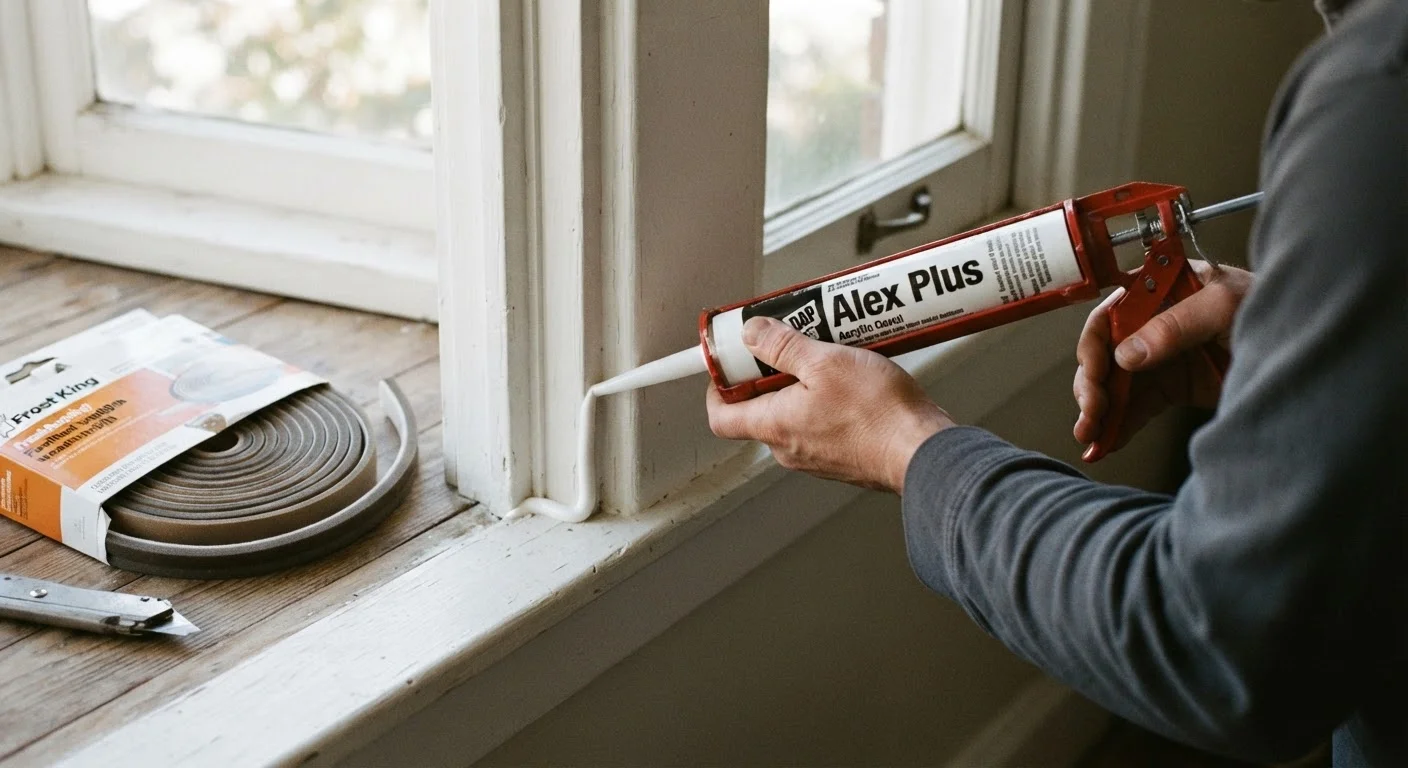
For windows specifically, a fresh bead of exterior-grade caulk around the perimeter of the frame is one of the most cost-effective weatherproofing steps available. Water infiltration and air leakage through these static gaps are significant contributors to energy loss in older homes.
When selecting caulk, silicone or siliconized latex formulas generally hold up better outdoors than pure latex. Indoors, paintable latex caulk is usually sufficient and easier to work with. Always clean and dry the surface before applying, and tool the bead smooth so it bonds to both sides of the gap.
| Criterion | Caulk | Weatherstripping |
|---|---|---|
| Best surface type | Stationary, non-moving gaps | Moving parts: doors, operable windows |
| Flexibility after cure | Rigid to semi-flexible | Compressible and recoverable |
| Typical lifespan | 5–20 years depending on formula | 2–10 years depending on material |
| Common materials | Silicone, latex, polyurethane | Foam tape, V-strip, door sweeps |
| Paintable | Yes (latex formulas) | Rarely |
| DIY difficulty | Low — caulk gun and prep required | Low — peel-and-stick or screws |
| Fails if misapplied to | Moving joints — cracks quickly | Static gaps — unnecessary and bulky |
When to Use Weatherstripping
Weatherstripping belongs anywhere a movable surface — a door, a casement window, a sliding pane — needs to seal against a frame. The most common scenarios:
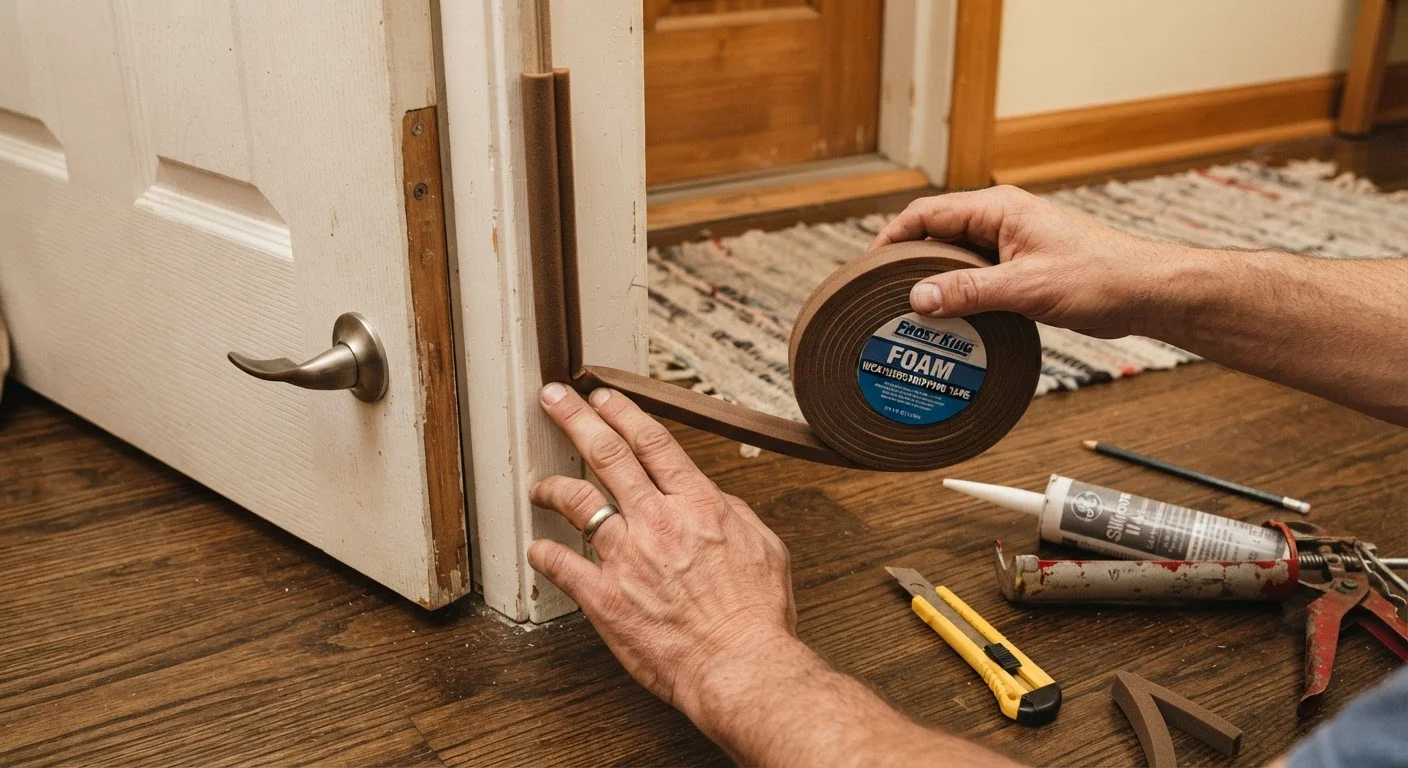
- Door stops: Foam tape or adhesive-backed V-strip (also called tension seal) applied to the door stop creates compression contact when the door closes.
- Door bottoms: Door sweeps or automatic door bottoms address the gap between the bottom of a door and the threshold — often the single largest air leak in an exterior door assembly.
- Operable windows: V-strip or reinforced foam tape works well on the sash channels of double-hung windows.
Foam tape is inexpensive and easy to install, but tends to compress permanently over time and may need replacement every few years. V-strip (usually metal or durable plastic) is more resilient and better suited to high-traffic doors. Choose the type that matches both your budget and how often the door or window operates.
How They Often Work Together
A common misconception is that you choose one or the other for a door or window. In reality, a fully sealed door assembly typically requires both. Consider a standard exterior door: the gap between the door frame and the surrounding wall framing is stationary — caulk that joint. The area where the door contacts the door stop when closed is a moving surface — that gets weatherstripping. The bottom gap gets a door sweep.
Treating each gap according to its movement type, rather than applying one product everywhere, is what produces a durable, effective result. Homeowners who caulk door stops or skip the bottom sweep are often puzzled why drafts persist after what felt like a thorough sealing job.
Don't Skip the Bottom of the Door
Studies of residential air leakage consistently identify the gap under exterior doors as a disproportionately large source of infiltration. A door sweep is inexpensive and typically installs with just a screwdriver. If you address only one weatherstripping location, this is the one to prioritize.
Neither product requires professional installation for most residential applications, though proper surface prep — cleaning, drying, and sometimes light sanding — makes a meaningful difference in how well either adheres and lasts.