

Why a Supplies Audit Is Worth Your Time
Most households don't run out of essentials all at once — they quietly drift toward shortfalls, one overlooked item at a time. A first-aid kit gets raided and never restocked. The backup batteries disappear. The cleaning supplies under the sink thin out without anyone noticing until they're needed. A deliberate audit, done periodically, closes that gap before it becomes a problem.
This isn't about building a bunker or spending money you don't have. It's a practical walkthrough that tells you exactly where your household stands so you can make smarter, more sequenced decisions about what to buy next. For a broader view of how household needs evolve over time, see The Full Picture on Home Essentials.
What you will need
How to Run the Audit: Step by Step
The steps below are designed to take 30–60 minutes for a typical home. Do them in order — the structure matters. Skipping straight to restocking without first documenting what you have is how people end up with duplicates of things they don't need and gaps in things they do.
Set Up a Simple Tracking Document
Before you walk a single room, create somewhere to record what you find. A notes app on your phone, a basic spreadsheet, or even a divided sheet of paper will work. Create two columns: What's missing or low and How urgent. You'll fill these in as you go, not after.
Walk Each Room Systematically
Start at one end of your home and move room by room, checking every storage area — under sinks, linen closets, the medicine cabinet, the junk drawer, the garage. For each space, ask: What does this room require to function day-to-day, and is that thing actually here? The room-by-room home essentials checklist is a useful reference if you want a structured category list to check against.
Pay attention to items that are present but nearly depleted — a roll of tape with two inches left, a half-empty bottle of dish soap, a nearly-spent first-aid kit. These belong on your list just as much as outright absences do.
Flag Safety and Health Items First
As you go, mark any safety-critical gaps immediately and separately from general supply shortfalls. This includes: smoke and carbon monoxide detector batteries, fire extinguisher charge, first-aid kit completeness, and any prescription or over-the-counter medications running low. These are not equivalent to running low on paper towels — they get prioritized regardless of budget.
Review Cleaning and Maintenance Supplies
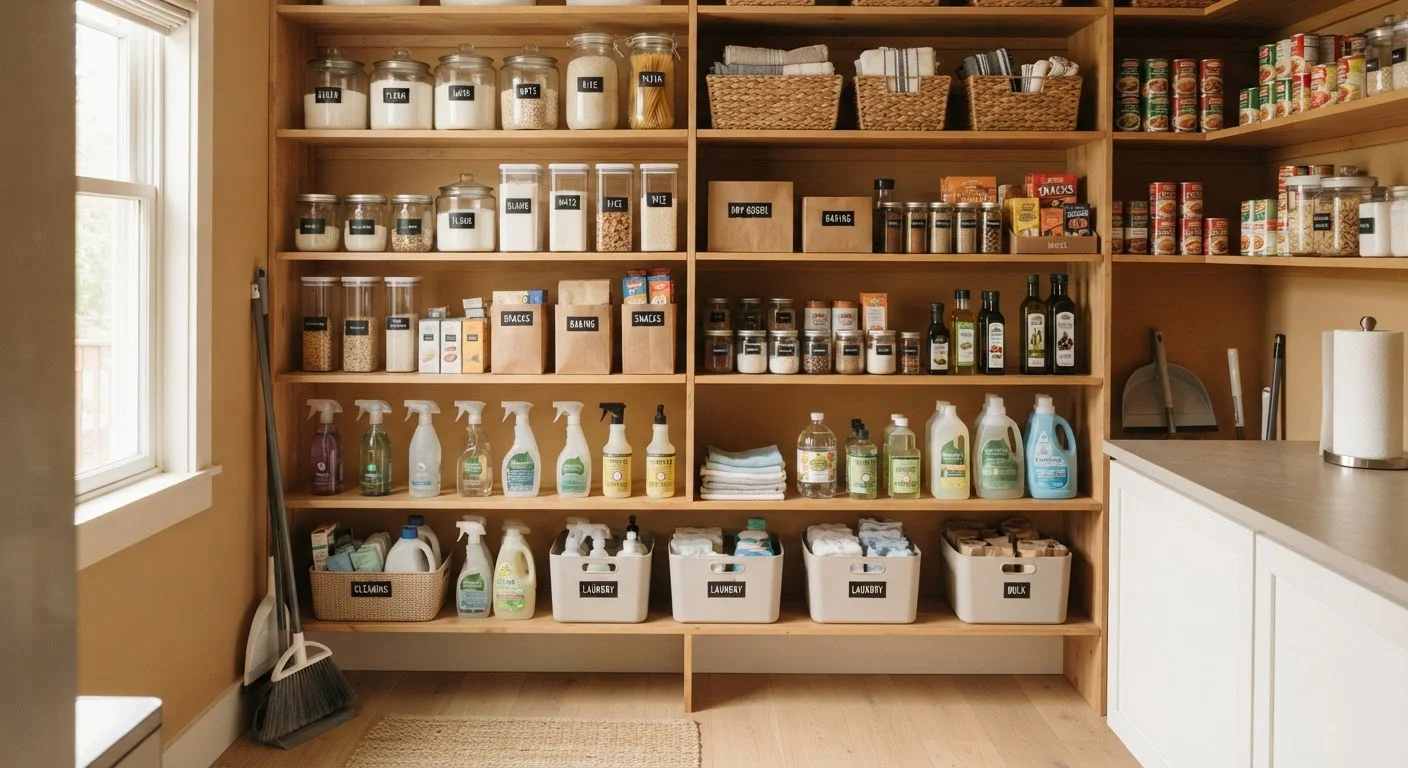
Check your cleaning supply inventory against what you actually clean regularly — surfaces, floors, bathrooms, laundry. Note anything missing or nearly gone. Also look at maintenance basics: spare light bulbs (in the wattages you use), HVAC filters, basic tools. These are the items that cause real friction when they're absent at the wrong moment.
Review Pantry and Kitchen Staples
Check your pantry, refrigerator, and kitchen storage for the staples your household actually uses on a regular basis — cooking oils, canned goods, condiments, dry goods, spices. Don't try to build an exhaustive store; focus on the things you reach for every week. Note what's absent or nearly depleted.
Compile and Prioritize Your List
With your room-by-room notes complete, consolidate the list and assign each item an urgency level: urgent, soon, or when budget allows. Safety items should already be flagged. From here, you have a clear, actionable picture of where your household stands — and a realistic starting point for your next restocking run.
Turning Your Findings Into a Restocking Plan
Once you've completed the walkthrough, you'll likely have a list of gaps that spans a few categories and varying levels of urgency. The key is sorting before spending. Divide your findings into three buckets: urgent (items you need within the week), soon (within the next month), and when budget allows.
If resources are tight, prioritizing safety and health-related supplies — think smoke detector batteries, a stocked first-aid kit, and medications that are running low — makes sense before restocking pantry staples or non-essential cleaning products. For more on sequencing purchases when money is limited, Stocking a Home on a Tight Budget walks through the trade-offs clearly.
Also factor in the time of year. Seasonal shifts bring supply needs that are easy to miss — storm prep in fall, allergy supplies in spring, extra linens when guests arrive over holidays. Our guide to seasonal household essentials outlines what most people routinely overlook.
Build the Habit: Audit Quarterly
Running this audit once a year isn't enough for most households — quarterly is a more reliable rhythm. Set a recurring reminder for the start of each season. Tying the audit to the season also prompts you to think ahead about weather-related needs, which tend to sneak up on people who aren't watching the calendar.