
The Processing Spectrum: It's Not Binary
Most nutrition conversations treat "whole" and "processed" as opposites. In reality, nearly every food has been processed in some way — washed, cut, pasteurized, or frozen — before it reaches you. The meaningful question is how much processing occurred and what was added or removed along the way.
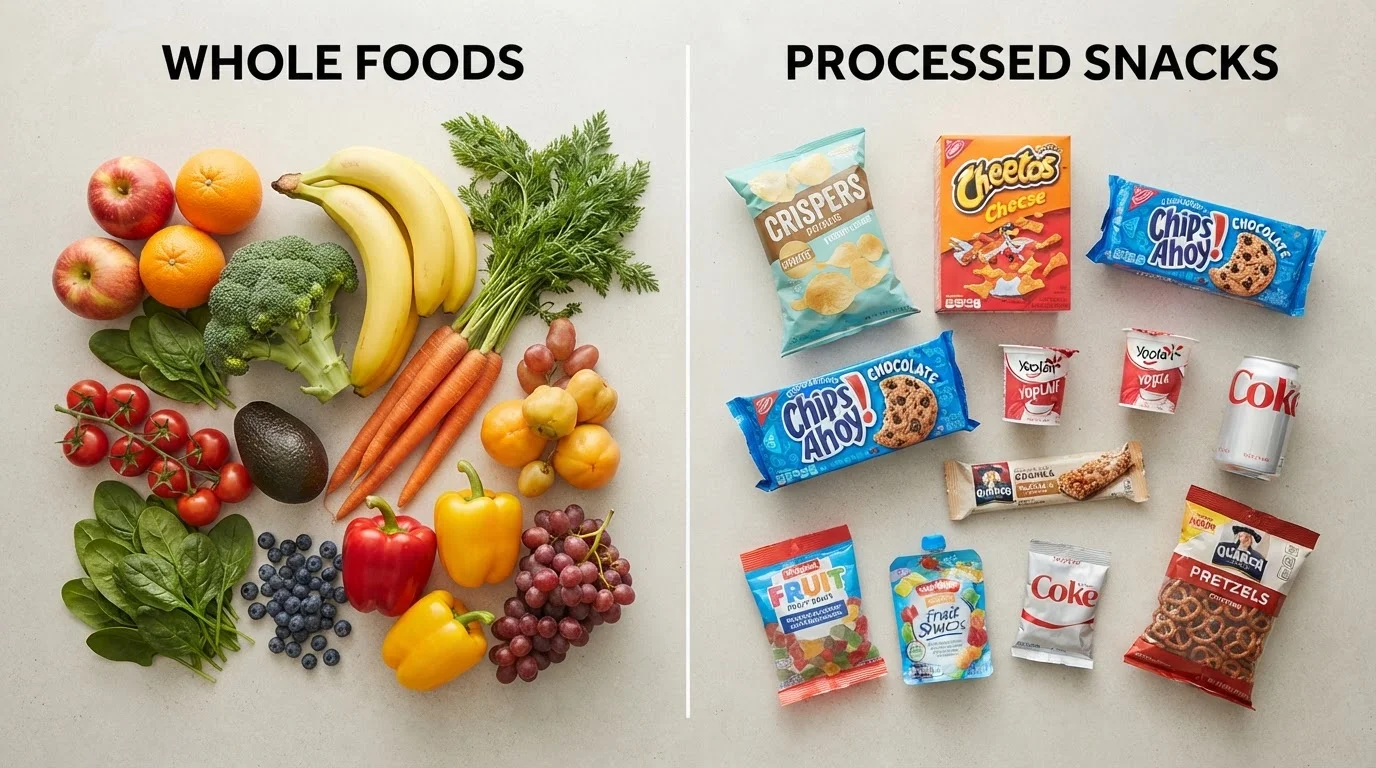
Nutrition researchers often use a classification system called NOVA, which groups foods into four categories based on the degree and purpose of processing. At one end sit unprocessed or minimally processed foods: whole fruit, plain dried legumes, plain frozen vegetables, and similar items. At the other end are ultra-processed foods — products formulated from industrial ingredients (such as modified starches, emulsifiers, and flavor compounds) that bear little resemblance to any single ingredient you could find in a kitchen.
In between are processed culinary ingredients (like oils and flour) and processed foods (like canned fish, cheese, or cured meats). Understanding this range helps you stop applying a single label to an entire grocery aisle and start evaluating individual products on their actual content.
| Criterion | Whole Foods | Processed Foods |
|---|---|---|
| Definition | Unaltered or minimally altered from natural state | Modified by industrial or culinary processes |
| Fiber retention | Generally intact | Often reduced, especially in ultra-processed |
| Added sugars | None | Common in ultra-processed products |
| Sodium levels | Naturally low | Frequently elevated for preservation or flavor |
| Shelf life | Typically short | Extended, sometimes significantly |
| Cost per serving | Variable; fresh can be costly | Minimally processed staples often affordable |
| Convenience | Requires more prep time | Often ready-to-eat or quick-prepare |
| Ingredient transparency | Single ingredient or very few | Ranges from simple to very complex lists |
Where the Nutritional Differences Actually Show Up
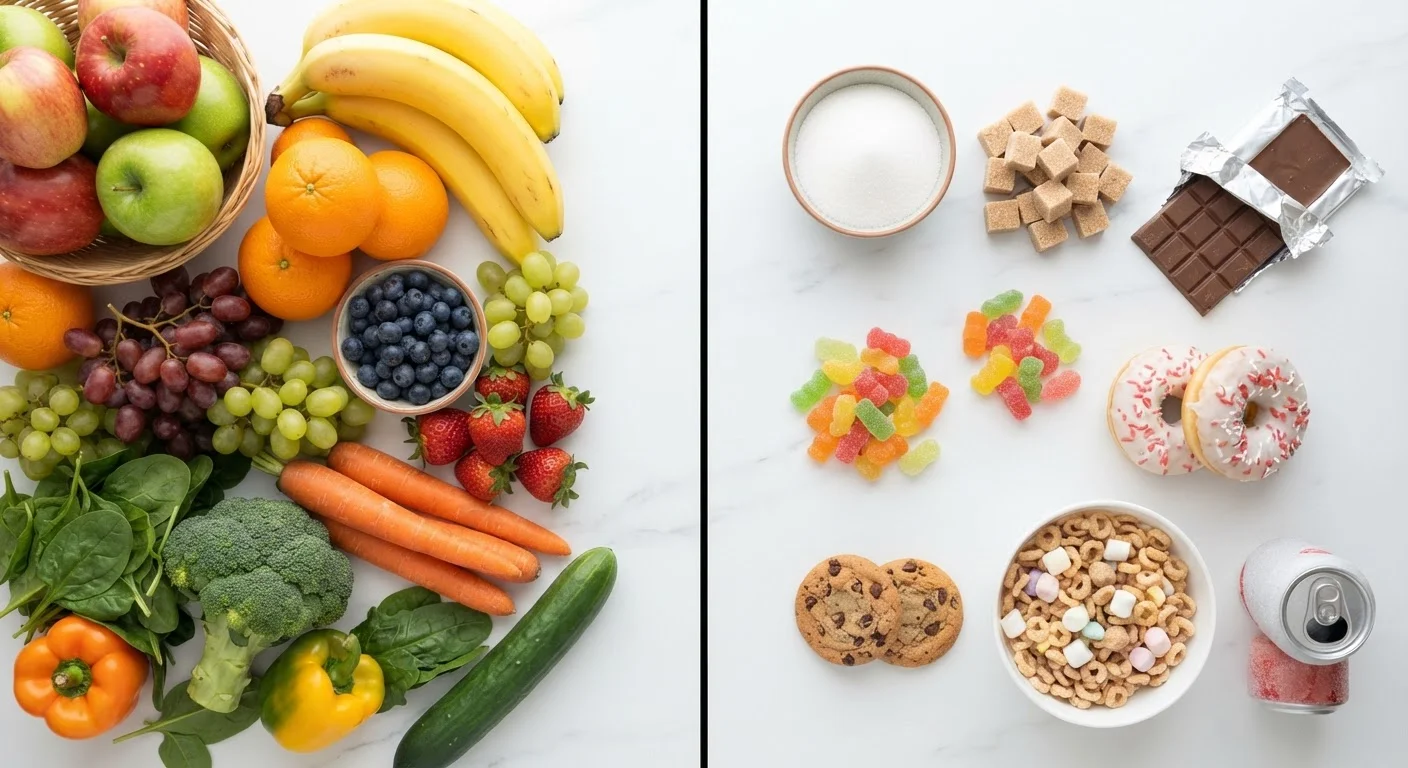
Whole foods — fresh vegetables, whole grains, legumes, nuts, and fruits — tend to arrive with their fiber, micronutrients, and phytonutrients intact. Fiber, in particular, is frequently lost or degraded during heavy processing, even though it plays documented roles in digestive health and satiety.
Ultra-processed foods, by contrast, often compensate for stripped nutritional content with added sugars, sodium, saturated fat, and refined starches that increase palatability and shelf life. Research published in nutritional epidemiology journals has consistently linked high intake of ultra-processed foods with elevated risks of several chronic conditions, though researchers note that diet quality, lifestyle factors, and socioeconomic context all interact in complex ways.
Minimally processed foods — a bag of plain frozen spinach, canned kidney beans with no salt added, or plain rolled oats — often retain a nutritional profile close to their whole counterparts. The preservation step (freezing, canning) does not meaningfully diminish most vitamins and minerals. This distinction matters enormously for budget-conscious shoppers: you do not have to buy fresh to eat well. For a closer look at distinguishing sugars in processed products, see our guide to added vs. natural sugar.
Practical Shopping Without the Guilt
Rigid avoidance of all processed foods is neither realistic nor necessary for most households. A more workable approach involves anchoring your cart with whole and minimally processed options while reading labels carefully before adding heavily processed items.
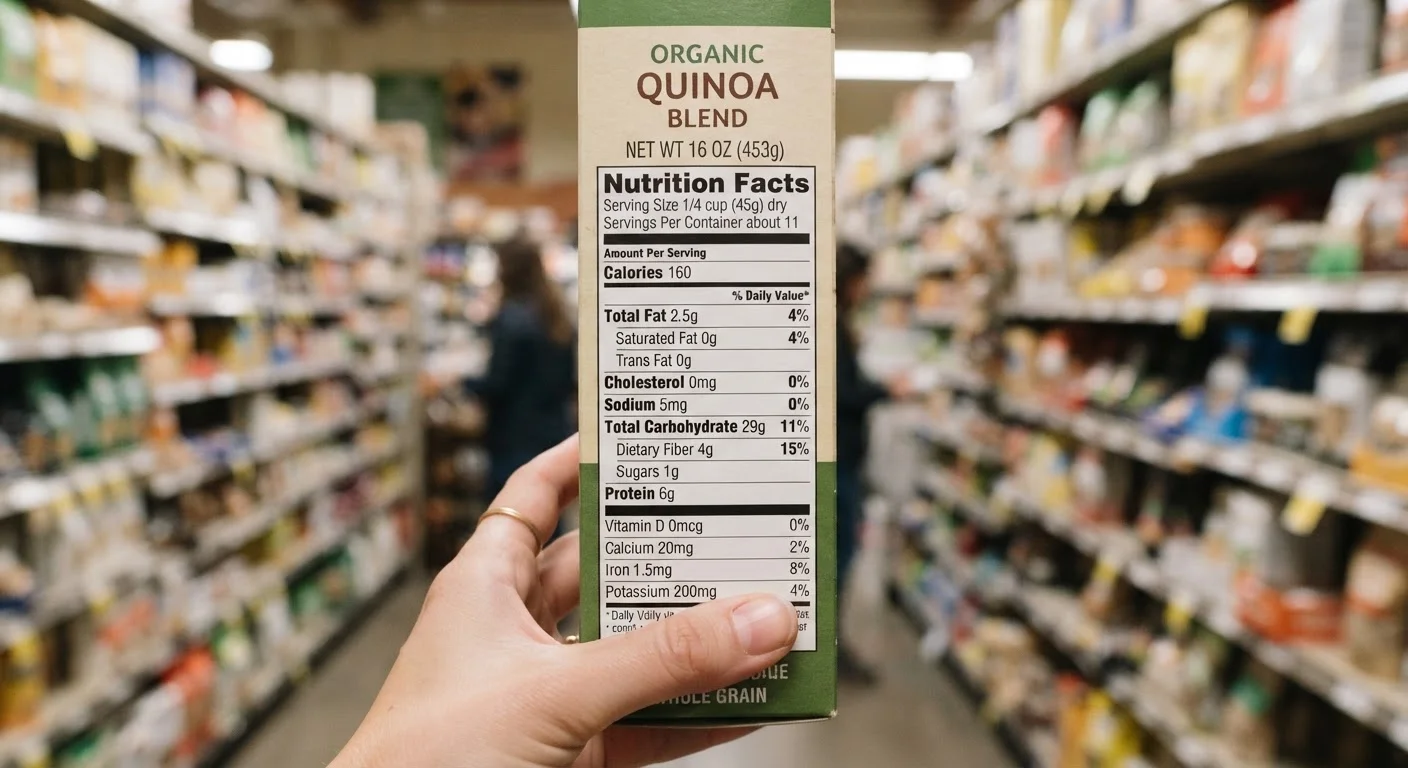
When you pick up a packaged product, the ingredient list often tells you more than the front of the package. A shorter list with recognizable ingredients — oats, water, salt — generally signals less processing than a list dense with chemical-sounding compounds. The nutrition facts panel is your most reliable tool; learning to use it fluently is a skill worth building. Our article on reading nutrition labels without the confusion walks through exactly how to do that.
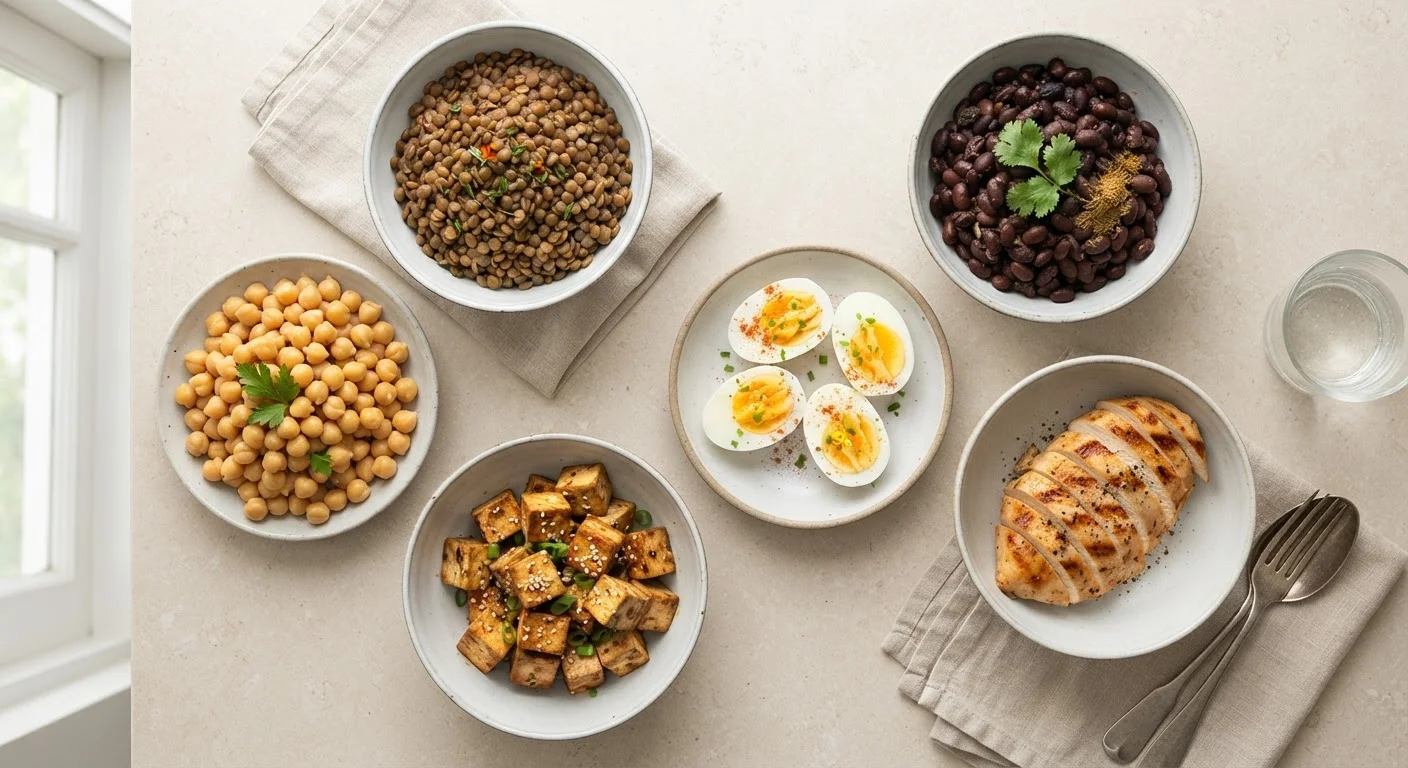
For protein specifically, both whole-food plant sources and minimally processed animal products can anchor a nutritious diet — a comparison worth exploring in depth through our breakdown of plant vs. animal protein. The goal is not dietary perfection but a consistent pattern of choices that leans toward nutrient density without ignoring the real constraints of time, taste, and budget.
57%
Share of U.S. daily calories from ultra-processed foods
A study published in BMJ Open estimated that ultra-processed foods account for roughly 57% of total daily calorie intake among U.S. adults.
~3x
Fiber gap between whole and ultra-processed diets
Research from nutritional epidemiology studies suggests diets centered on ultra-processed foods provide roughly one-third the dietary fiber of diets built around whole and minimally processed foods.
70%
Of U.S. sodium intake from processed and packaged foods
The U.S. Centers for Disease Control and Prevention (CDC) has noted that the majority of Americans' sodium consumption comes from processed, packaged, and restaurant foods rather than home-added salt.
This article is for general informational and educational purposes only. It is not a substitute for personalized nutrition or medical advice. Consult a qualified healthcare professional or registered dietitian for guidance specific to your health needs.