
Why the Nutrition Label Exists — and What It Can Do for You
The Nutrition Facts label has appeared on most packaged foods sold in the United States since the early 1990s, and the Food and Drug Administration (FDA) updated its format in 2016 to reflect current nutritional science. Its purpose is straightforward: give consumers standardized information so they can compare products and make informed choices. The label won't tell you what to eat — that's a personal decision best guided by a healthcare provider — but it gives you the raw data to make sense of what's inside a package before you buy it.
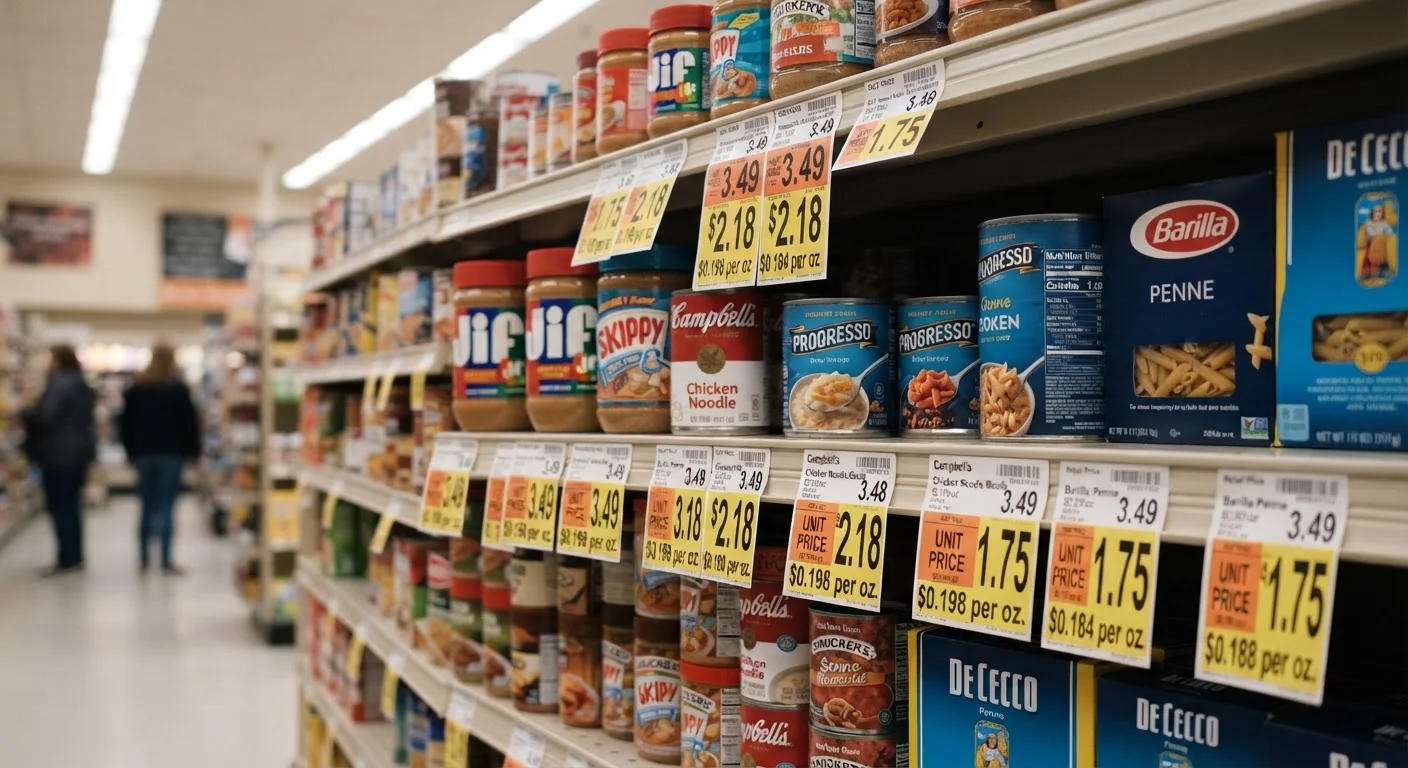
Learning to read the label pairs well with other grocery-smart habits. For instance, once you know what you're comparing nutritionally, unit pricing math can help you determine which size or brand gives you the most food value for your dollar.
Use the Label as a Comparison Tool
The real power of the Nutrition Facts label shows up when you hold two similar products side by side. Compare the same serving size across both labels and focus on the three or four nutrients most relevant to your goals — sodium, added sugars, fiber, or saturated fat, for example. This takes about 30 seconds and is far more reliable than front-of-package claims.
Step-by-Step: Reading Each Section of the Label
Work through the label from top to bottom. Each section builds on the one above it, so skipping around can lead to misreading the numbers.
Start with serving size and servings per container
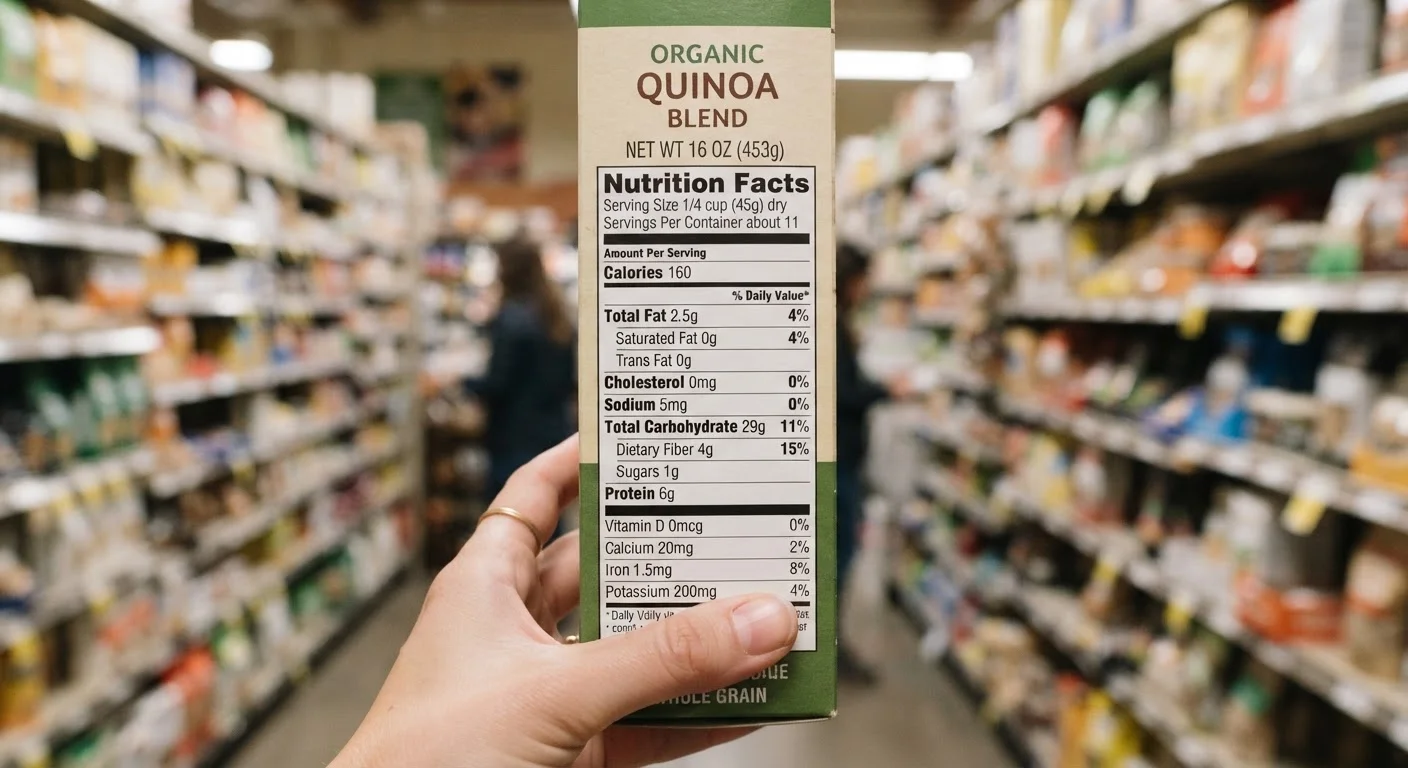
The very first line under "Nutrition Facts" is the serving size, expressed in a common household measure (such as "1 cup" or "about 12 crackers") and its gram equivalent. Every other number on the label — calories, fats, sodium, everything — applies to that one serving, not the whole package.
Directly below serving size is servings per container. If a bottle of juice lists 2.5 servings and you drink the whole bottle, multiply every nutrient figure by 2.5. This single step corrects the most common label-reading mistake.
Check the calorie count in context
Calories are displayed prominently in a larger font. This number tells you how much energy one serving provides. On its own, a calorie count has limited meaning — context matters. A 200-calorie serving of lentils delivers fiber, protein, and micronutrients. A 200-calorie serving of a candy bar delivers far less nutritional variety. Use calories alongside the nutrient breakdown below to assess overall value.
Understand Percent Daily Value (%DV)
The right column of the label shows %DV for most nutrients. This figure is based on a 2,000-calorie daily diet — a general reference, not a prescription — and tells you how much of the recommended daily amount one serving provides.
- 5% DV or less is generally considered low for a nutrient.
- 20% DV or more is generally considered high.
Use this as a quick screening tool: aim for higher %DV in fiber, vitamins, and minerals, and lower %DV in saturated fat, sodium, and added sugars. Your individual targets may differ — a registered dietitian can help you personalize these benchmarks.
Look at the fats section
The label breaks fat into total fat, saturated fat, and trans fat. Saturated fat is linked in nutrition research to elevated LDL cholesterol when consumed in excess, though the science continues to evolve. Trans fat — listed separately — is associated with cardiovascular risk; the FDA has largely phased out artificial trans fats, but trace amounts may still appear. Products listing 0g trans fat can still contain up to 0.5g per serving, so check the ingredient list for "partially hydrogenated oils" as well.
Examine sodium, total carbohydrates, and added sugars
Sodium is one of the most useful figures for shoppers managing blood pressure or simply trying to moderate processed-food intake. Many packaged foods are surprisingly high in sodium — even items that don't taste salty.
Total carbohydrates breaks down into dietary fiber, total sugars, and added sugars. Dietary fiber supports digestion and has been associated with a range of health benefits. Added sugars — those introduced during processing rather than occurring naturally in fruit or dairy — now have their own dedicated line on updated labels, making them much easier to identify. See how added and natural sugars differ for more context.
Review the micronutrients and the ingredient list
The bottom section of the label lists key micronutrients — typically Vitamin D, calcium, iron, and potassium — along with their %DV. These are nutrients the FDA identified as commonly under-consumed by Americans. For a broader look at why these matter, micronutrients 101 is a useful companion read.
Below the Nutrition Facts box sits the ingredient list. Ingredients are listed in descending order by weight — the first ingredient is present in the greatest amount. If sugar, a refined grain, or a partially hydrogenated oil appears in the first two or three positions, that tells you something important about the product's composition regardless of what the front of the package claims.
Common Pitfalls and What to Do About Them
Even informed shoppers run into a few recurring traps when reading nutrition labels.
- Packages with multiple servings: A bag of chips labeled "3 servings" means every number on the label must be multiplied by three if you eat the whole bag. This is where many people underestimate calorie or sodium intake.
- Low-fat doesn't mean low-calorie: Removing fat from a product often means adding sugar or starch to maintain texture. Check total carbohydrates and added sugars alongside fat content.
- "Natural" claims on the front are unregulated: Only the Nutrition Facts panel and ingredient list carry standardized, federally regulated information. Front-of-package claims like "natural," "wholesome," or "made with real fruit" are marketing language — verify them against the label.
For a deeper look at one of the trickiest label entries, see our guide on added sugar vs. natural sugar. And if you want to understand how fiber fits into the bigger picture, dietary fiber basics is a solid next read.
If you're newer to nutrition concepts overall, the Everyday American's Introduction to Balanced Eating covers the foundational ideas that make label reading even more useful.
This article is for general informational and educational purposes only and is not a substitute for advice from a qualified healthcare or nutrition professional. Consult a registered dietitian or your healthcare provider for guidance tailored to your individual health needs.