

Why This Relationship Is So Easy to Underestimate
Most people have experienced the short-term version: a bad night's sleep leaves you irritable, foggy, and less equipped to handle whatever the day throws at you. But the deeper picture is more significant — and less often discussed. Sleep and mental health do not merely coexist. They actively shape each other, continuously, over days and years.
This bidirectional relationship means that poor sleep can be both a symptom of mental health struggles and a cause of new or worsening ones. When people try to address one without understanding the other, they often find themselves stuck. Understanding what mental wellness actually means is a useful starting point, because the sleep connection is one of its most tangible expressions.
~1 in 3
U.S. adults reporting insufficient sleep
The CDC has reported that roughly one in three American adults do not regularly get the recommended amount of sleep.
2–3×
Increased depression risk with chronic insomnia
Research published in peer-reviewed sleep medicine journals has found that people with chronic insomnia face a significantly elevated risk of developing depression compared to those without sleep disorders.
~17%
Adults with both insomnia and anxiety symptoms
Studies consistently find high co-occurrence rates between insomnia and anxiety disorders, reflecting how tightly the two conditions are linked.
What Happens in the Brain When Sleep Is Disrupted
During sleep, the brain performs critical maintenance work: consolidating memories, clearing metabolic waste, and resetting emotional processing systems. The amygdala — the brain region most associated with emotional reactivity — becomes significantly more reactive after even one night of poor sleep. Studies have found that sleep-deprived individuals show stronger emotional responses to negative stimuli and weaker responses to positive ones, a pattern that mirrors what's seen in anxiety and depressive disorders.
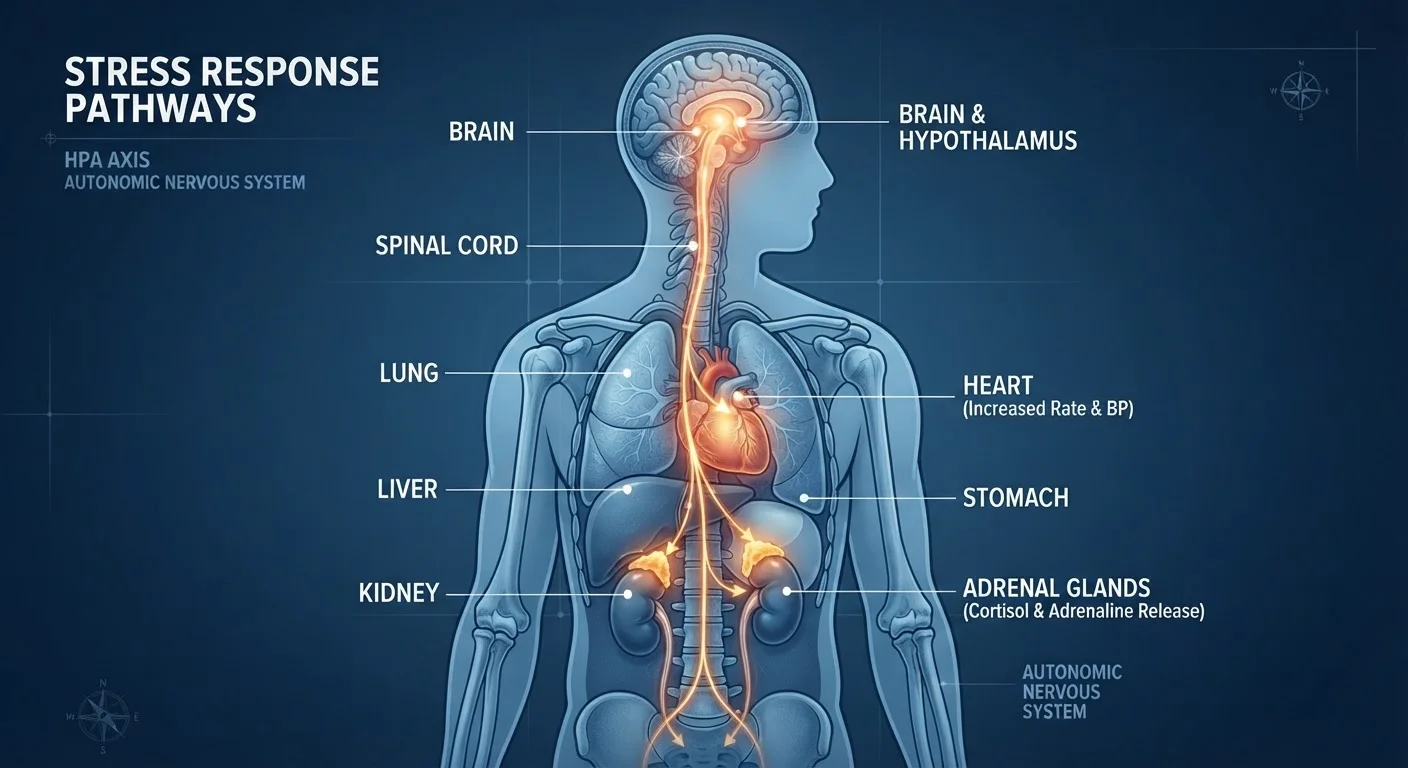
Sleep deprivation also elevates cortisol, the body's primary stress hormone. Elevated cortisol in the evening is associated with difficulty falling asleep — which means a stressful day can chemically prime the body to struggle that night. Chronic stress triggers real biological changes that overlap considerably with the effects of ongoing sleep loss, making the two difficult to separate in practice.
How Mental Distress Disrupts Sleep
The return direction of this cycle is equally well-documented. Anxiety produces what researchers call hyperarousal — a persistent state of heightened alertness that makes it difficult for the brain and body to transition into sleep. Intrusive thoughts, worry loops, and rumination at bedtime are hallmark features of both anxiety disorders and ordinary life stress.
Depression, on the other hand, is associated with a different sleep profile: people may sleep too much, experience fragmented sleep, or wake in the early morning hours and be unable to return to sleep. In both cases, the mental health condition actively undermines sleep architecture — the structured progression through sleep stages that the brain needs to function well.
The practical result is that many people experiencing anxiety or low mood also report persistent sleep problems, even when they create every opportunity for rest. This is not a failure of discipline — it is a physiological response.
Try a Simple Wind-Down Signal
About 30 minutes before your target bedtime, dim the lights in your home and put your phone face-down or in another room. This two-step habit reduces stimulating light exposure and cuts off the scroll habit that often delays sleep onset. It costs nothing and can be started tonight.
Breaking the Cycle: Where Low-Cost Habits Make a Difference
While clinical interventions are sometimes necessary — and anyone with persistent or severe symptoms should consult a healthcare professional — many people can meaningfully interrupt this cycle with consistent behavioral strategies. The most evidence-supported approaches are also among the most accessible.
- Consistent sleep and wake times: Going to bed and waking at the same time every day, including weekends, helps stabilize the body's circadian rhythm, which regulates both sleep and mood-related hormones.
- Wind-down routines: A 20–30 minute pre-sleep routine that avoids screens and bright light signals the brain that sleep is approaching. This can be as simple as reading, light stretching, or slow breathing exercises.
- Limiting late caffeine: Caffeine has a half-life of roughly five to six hours in most adults, meaning an afternoon coffee can still be affecting alertness at bedtime.
- Addressing daytime stress: Because evening cortisol levels are shaped by daytime stress, low-effort mental wellness habits practiced during the day can improve nighttime sleep quality.
It's also worth noting that impaired sleep carries risks beyond mood. Drowsy driving is a serious safety concern that affects judgment and reaction time in ways most people underestimate.
This article is for general informational and educational purposes only and is not a substitute for professional medical advice, diagnosis, or treatment. Always consult a qualified healthcare provider with questions about your health or sleep.