

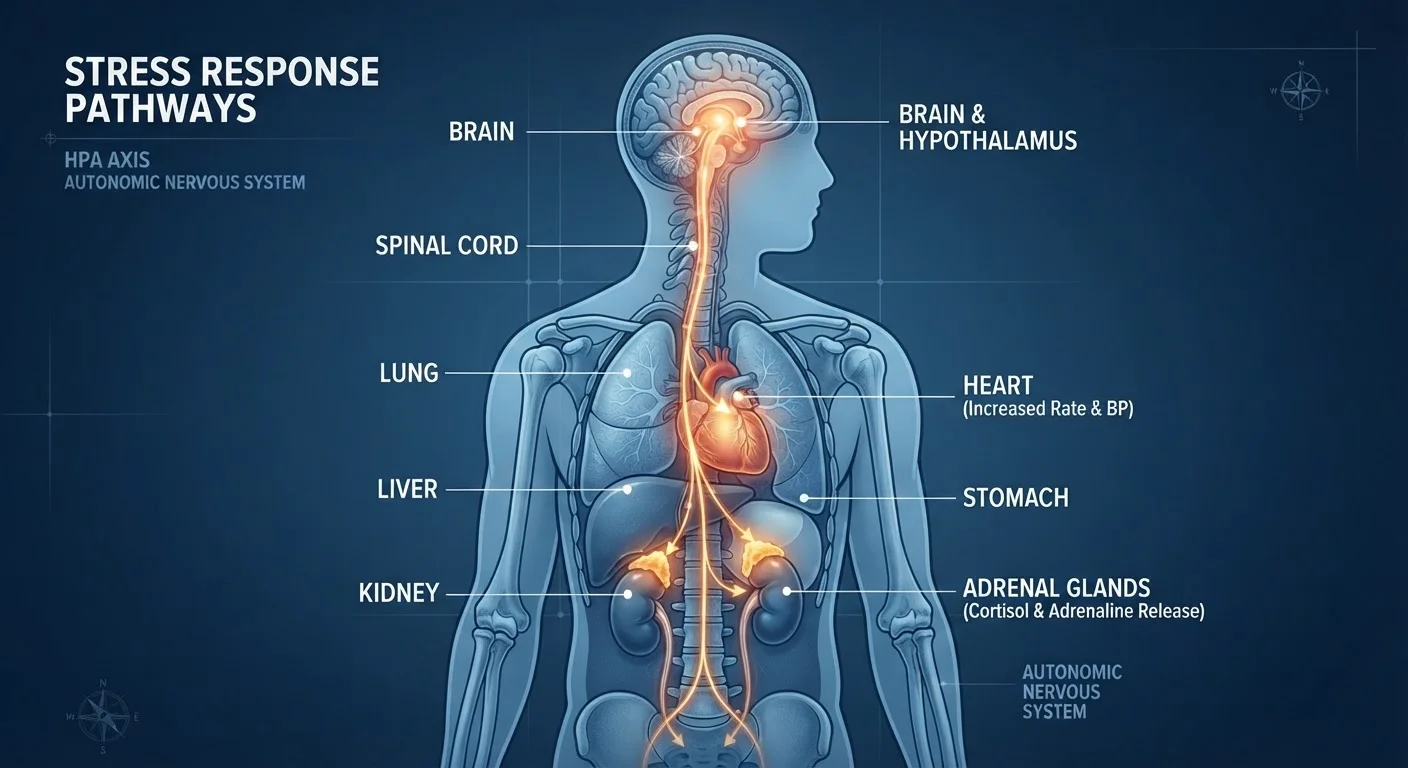
The Biology Behind the Feeling
When you encounter a threat — real or perceived — your brain's amygdala (the area that processes emotional responses) sends an alarm signal. Within seconds, your hypothalamus activates the sympathetic nervous system, triggering the release of adrenaline. Your heart rate climbs, muscles tense, and breathing quickens. This is the classical "fight-or-flight" response, and in a genuine emergency, it is genuinely life-saving.
The problem arises when that alarm never fully turns off. Ongoing financial pressure, job insecurity, caregiving responsibilities, or relationship strain can keep the brain in a near-constant state of low-level threat detection. When the trigger does not resolve, the body recruits a second, slower-acting system: the hypothalamic-pituitary-adrenal (HPA) axis. This cascade ends with the adrenal glands releasing cortisol — often called the stress hormone — into the bloodstream.
Cortisol is not inherently harmful. In short bursts, it sharpens focus, mobilizes energy stores, and supports immune activity. But when cortisol levels stay elevated day after day, the body begins to pay a steep biological price.
How Prolonged Cortisol Elevation Affects Major Body Systems
Research in psychoneuroimmunology — the study of how the mind and nervous system interact with immunity — has documented several pathways through which chronic stress causes measurable physical harm.
77%
Americans reporting physical stress symptoms
According to the American Psychological Association's Stress in America survey, a large majority of U.S. adults report experiencing physical symptoms they attribute to stress.
3×
Higher cold risk under chronic stress
Research published in the journal Psychosomatic Medicine found that people under prolonged psychological stress were significantly more susceptible to developing the common cold when exposed to a virus.
40%
Adults with stress-related sleep disruption
The APA's Stress in America data consistently shows that roughly 4 in 10 U.S. adults report that stress causes them to lie awake at night.
Heart and Blood Vessels
Sustained high cortisol raises blood pressure and promotes inflammation in artery walls. Over time, this increases the workload on the heart and raises cardiovascular risk. The American Heart Association recognizes psychological stress as a contributing factor to heart disease, though the precise mechanisms are still being studied.
Immune System
Short-term stress briefly boosts immune activity. Chronic stress does the opposite: it suppresses the production of protective immune cells and increases systemic inflammation. This is why people under prolonged stress often report catching colds more frequently or taking longer to recover from minor illnesses.
Digestive System
The gut and brain communicate constantly through the vagus nerve and a network of hormones. Chronic stress can disrupt that communication, contributing to symptoms like nausea, bloating, diarrhea, or constipation. People with irritable bowel syndrome (IBS) often notice stress-related flare-ups, reflecting this gut-brain connection.
Sleep Architecture
Elevated cortisol in the evening — when levels should naturally fall — interferes with the ability to fall and stay asleep. Poor sleep, in turn, drives cortisol higher the following day, creating a reinforcing cycle. For a detailed look at this two-way relationship, see our article on sleep and mental health.
Recognizing Chronic Stress in Your Own Body
Because the symptoms of chronic stress overlap with many common ailments, they are often dismissed or attributed to aging, diet, or "just being busy." Patterns worth paying attention to include:
- Persistent muscle tension, especially in the jaw, neck, or shoulders
- Recurring tension headaches
- Difficulty falling or staying asleep despite feeling exhausted
- Digestive irregularity without a clear dietary cause
- Frequent minor infections or slow wound healing
- Feeling emotionally "flat" or persistently irritable
None of these symptoms alone confirms chronic stress — they all have other possible causes. But a pattern of several symptoms occurring together over weeks or months is a reasonable signal to discuss with a healthcare professional.
This article is for informational purposes only and does not constitute medical advice. If you are experiencing persistent physical or emotional symptoms, please consult a qualified healthcare provider.
Practical, Evidence-Informed Ways to Support Your Stress Response
Managing chronic stress rarely requires expensive interventions. Several approaches with meaningful research backing are available to most people at little or no cost.
Consistent sleep timing is one of the most impactful steps. Going to bed and waking at consistent times — even on weekends — helps regulate the HPA axis and lower nighttime cortisol. Diaphragmatic breathing (slow, deep breaths that expand the belly rather than the chest) activates the parasympathetic nervous system, counteracting the fight-or-flight state within minutes.
Moderate physical movement — a 20-to-30-minute walk, for instance — lowers cortisol and raises endorphins, though extreme exercise without adequate recovery can temporarily raise cortisol levels further. Even brief periods of movement spread through the day appear beneficial.
Reflective writing is another low-barrier tool. Putting stressors into words on paper helps the prefrontal cortex — the brain's rational planning center — process threats more effectively, reducing the amygdala's alarm response. Our explainer on journaling for mental clarity reviews what the evidence actually supports in this area.
For stress that significantly impairs daily functioning, cognitive behavioral therapy (CBT) and other professionally guided approaches have strong evidence behind them. Reaching out to a licensed mental health professional is a practical, not a last-resort, step.