
What Primer Actually Does to a Surface
Most homeowners think of primer as a white undercoat — essentially a cheap layer you slap on before the real paint. That framing undersells what primer is engineered to do. Primer is a bonding agent. Its resins are formulated to grip porous, slick, or contaminated surfaces in ways that standard paint simply cannot.
Paint is designed to deliver color, sheen, and a durable finish. Primer is designed to adhere. When you skip that adhesion layer, you're asking one product to do two very different jobs — and it rarely does both well.
On porous surfaces like new drywall or bare wood, unprimed paint soaks in unevenly. You end up with dull patches, visible grain telegraphing through the topcoat, and color that looks inconsistent regardless of how many coats you apply. Primer seals the surface so the paint sits on top uniformly, which is where both adhesion and color accuracy come from.
Myth
Paint-and-primer-in-one products mean you never need a separate primer.
Fact
Paint-and-primer-in-one products work adequately on previously painted surfaces in good condition, but they are not a substitute for dedicated primer on bare, stained, or problematic surfaces.
Combination products contain some primer resins blended into the paint formula, which improves adhesion marginally over standard paint. However, the concentration of bonding agents is far lower than in a dedicated primer. On new drywall, bare wood, or over stains, these products perform much like regular paint — and the surface problems they fail to address will show through the finish. Use them where conditions are already favorable; don't rely on them to solve a bonding or sealing problem.
Myth
Primer is only necessary when you're changing to a very different color.
Fact
Color change is just one reason to prime. Surface condition, material type, and the presence of stains or damage are often more important factors than color difference.
A homeowner repainting a white wall white still needs primer if that wall has water stains, was recently repaired with joint compound, or has a glossy sheen the new paint won't grip. The decision to prime should start with a surface assessment, not a color comparison. Ask: Is this surface porous, damaged, stained, or slick? If yes to any of those, primer is doing work that no topcoat can replicate.
Myth
More coats of paint can compensate for skipping primer.
Fact
Additional paint coats cannot replicate what primer provides — they compound costs without solving the underlying adhesion or sealing problem.
If paint is peeling because it never properly bonded to the surface, adding more of the same paint on top doesn't fix the bond — it adds more weight to the failing layer. Similarly, a tannin stain bleeding through paint will continue to bleed through every additional coat of the same topcoat until a stain-blocking primer breaks the chemical pathway. More paint is not a workaround; it's a more expensive way to eventually arrive at the same failure point.
Myth
Any primer works on any surface — they're all basically the same product.
Fact
Primers differ significantly in chemistry and are formulated for specific surface types and problem conditions.
A PVA primer optimized for new drywall will not block a stubborn water stain. A shellac-based stain blocker, while excellent for sealing odors and stains, is unnecessary and harder to work with on a simple repaint. Using the wrong primer type can leave real problems unaddressed while adding cost and labor. Read the label specifically for the surface you're working with, not just for general compatibility with the topcoat.
When Skipping Primer Genuinely Costs You
There are situations where experienced painters sometimes skip primer — for example, repainting a previously painted wall in a similar color using a quality topcoat. That can work. But there are several conditions where skipping primer is a documented recipe for failure, and they're more common in everyday home projects than most people expect.
2–3x
Extra paint coats needed without primer on new drywall
Industry painting guides and drywall manufacturers consistently note that unprimed new drywall typically requires two to three additional finish coats to approach even coverage.
Up to 50%
Potential reduction in paint used when surface is properly primed
Because primer seals porous surfaces, paint spreads further and covers more evenly — meaning fewer gallons are needed to reach the desired finish, according to paint industry guidance.
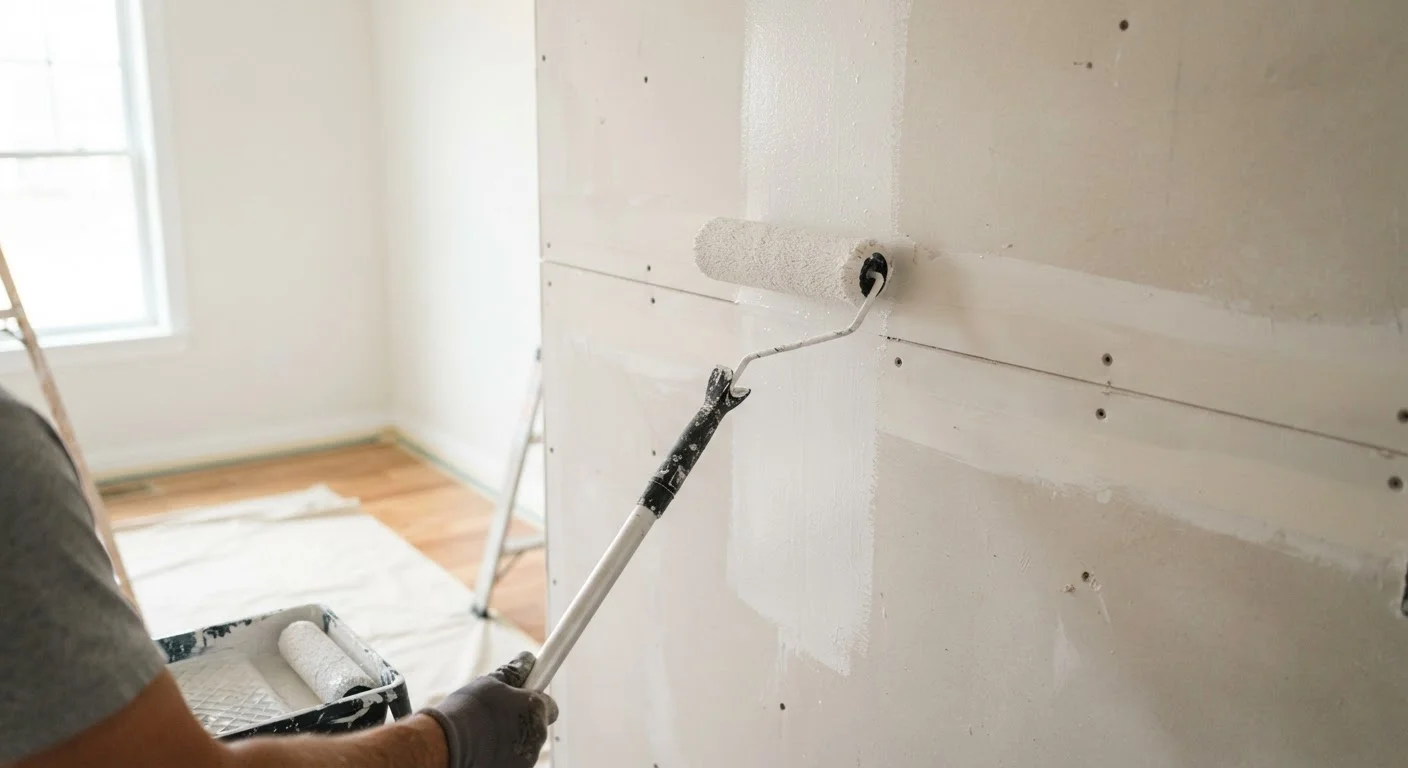
New drywall: Fresh drywall has a paper facing that absorbs paint aggressively and unevenly. Without a drywall-specific primer, the seams, fastener spots, and joint compound will all look different from the surrounding surface — a problem called flashing. No number of additional paint coats will fully correct it.
Bare or stripped wood: Wood is absorbent and contains tannins that bleed through paint, causing yellow or brown stains to appear even through multiple topcoats. A shellac-based or stain-blocking primer stops this bleed before it starts.
Covering dark or saturated colors: Trying to paint a deep burgundy wall white without primer means applying six or more coats of topcoat to achieve opacity. Two coats of a tinted primer followed by two coats of paint is faster, cheaper, and yields a better result.
Water-damaged or stained surfaces: Water stains, smoke damage, and pet odors can bleed through or off-gas through regular paint indefinitely. A stain-blocking primer — particularly oil-based or shellac — chemically seals these issues before painting begins.
Don't Prime Over Active Moisture Problems
Applying primer or paint over an actively damp or wet surface — such as a wall with an ongoing leak — will not seal the problem. The primer will fail and peel as moisture continues to push through. Address the source of the water intrusion first, allow the surface to fully dry, then prime and paint. When in doubt about structural moisture issues, consult a qualified contractor before proceeding.
Separating Myth from Fact on Primer
Marketing language has muddied the primer conversation considerably. Here are the most persistent misconceptions that end up costing homeowners time and money.
Choosing the Right Primer for the Job
Not all primers are interchangeable. Matching primer type to surface condition is what makes the difference between a job that holds up for a decade and one that starts showing problems within a year.
- PVA (Polyvinyl Acetate) primer — Best for new drywall. Seals the paper facing and joint compound evenly.
- Latex primer — A practical general-purpose option for previously painted walls, minor repairs, and most interior surfaces.
- Oil-based primer — Offers superior adhesion on glossy or slick surfaces, bare metal, and wood with heavy tannin content. Requires mineral spirits for cleanup.
- Shellac-based primer — The strongest stain blocker available. Handles water stains, smoke, tannin bleed, and odors. Dries fast but has strong fumes; ensure adequate ventilation.
As a general rule: match the primer aggressiveness to the problem you're dealing with. For a simple repaint of a clean wall, a basic latex primer is often sufficient. For anything involving stains, new materials, or dramatic color changes, step up to a more specialized product.
Before starting any paint project, assess your surface honestly. A few extra dollars spent on the right primer almost always saves money on additional paint coats — and avoids the frustration of redoing work that failed prematurely.