

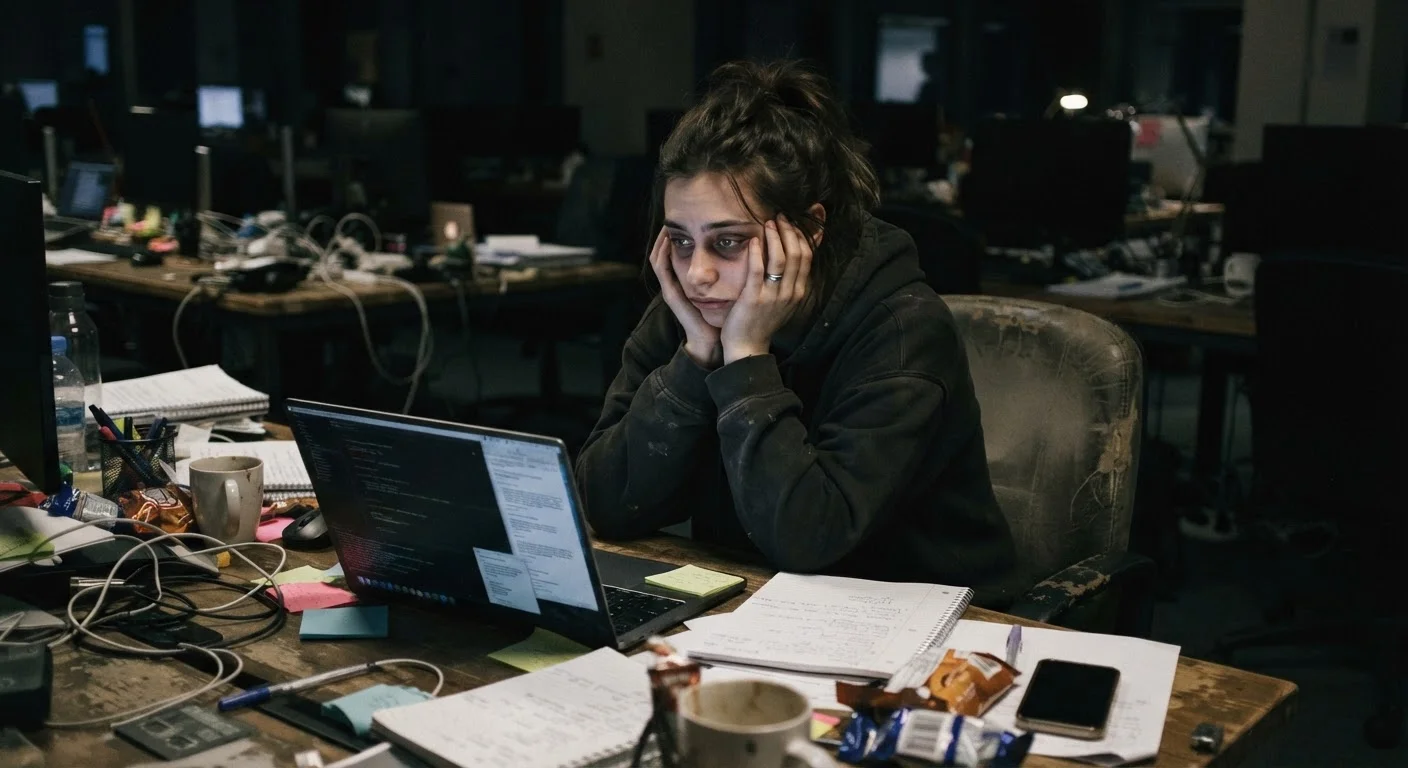
What Burnout Actually Is
Burnout is not a personality flaw or a sign that you are weak. The World Health Organization classifies it as an occupational phenomenon characterized by three dimensions: feelings of energy depletion or exhaustion, increased mental distance from one's job, and reduced professional effectiveness. While the term originated in workplace research, mental health professionals now recognize burnout patterns in caregivers, students, and parents as well.
Understanding this distinction matters because it changes how you respond. Fatigue from a single hard week typically resolves with a weekend of rest. Burnout, by contrast, develops gradually over months and does not reliably lift with a single day off. If you consistently feel emotionally numb, cynical about responsibilities that once felt meaningful, or unable to focus regardless of how much sleep you get, those can be signs that something more than ordinary tiredness is at play.
This article is for general informational and educational purposes only. It is not a substitute for professional mental health advice, diagnosis, or treatment. If you are experiencing significant distress or symptoms that interfere with daily functioning, please consult a qualified healthcare professional.
Common Mistakes That Make Burnout Worse
Most people respond to burnout the same way they would respond to a deadline crunch — by pushing harder. That instinct, while understandable, is one of the most consistent ways to deepen the problem. Below are the most frequent errors people make when dealing with burnout, along with practical ways to change course.
Treating burnout like ordinary tiredness and expecting a single good night's sleep to fix it.
Why it happens: Because rest normally cures fatigue, people assume more rest or a long weekend will reset burnout too. When it doesn't, they often blame themselves.
Filling every free moment with productivity tasks in an effort to "catch up."
Why it happens: People who are burning out often feel a mounting sense of falling behind, which creates a cycle of over-scheduling even downtime.
Using caffeine, alcohol, or other substances to regulate energy and mood.
Why it happens: These options feel immediately effective and are widely available, making them an easy default when energy and mood feel unmanageable.
Avoiding social connection because interacting with others feels like too much effort.
Why it happens: Burnout creates a genuine desire to withdraw, and that impulse can feel protective. Social interaction does require energy, which feels scarce.
Ignoring the problem and hoping it resolves on its own without any behavioral change.
Why it happens: Acknowledging burnout can feel like admitting failure or weakness, especially in professional or caregiving contexts that reward endurance.
What Actually Supports Recovery
Recovery from burnout rarely looks like a single dramatic intervention. Research consistently points to sustainable, incremental changes in daily habits rather than one-time solutions. A few evidence-informed principles tend to help:
- Protect genuine rest. Rest that actually restores you is different from passive screen time. Short walks, quiet reading, or light social connection tend to be more restorative than scrolling, which can keep your nervous system in a low-grade alert state.
- Address the source, not just the symptoms. If chronic overwork, a toxic dynamic, or unclear boundaries caused the burnout, those conditions need to change — not just be coped with.
- Talk to someone qualified. A licensed therapist or counselor can help you identify patterns and build specific coping strategies. Community mental health centers, sliding-scale clinics, and employer assistance programs (EAPs) often make this accessible at low or no cost.
77%
Workers who have experienced burnout
A Deloitte survey found that 77% of respondents had experienced burnout at their current job, with more than half citing it as happening more than once.
2–3x
Increased likelihood of making medical errors
Research published in medical literature suggests burned-out healthcare workers are significantly more likely to make errors, illustrating how burnout impairs cognitive function broadly.
Building recovery in small, budget-friendly ways — protecting a lunch break, declining a non-essential commitment, or spending ten minutes outside each day — can create meaningful momentum over time. The goal is not to feel better instantly but to stop the conditions that are sustaining the burnout.